West Stratton, near Micheldever, Hampshire to Confluence with the River Test at Wherwell, Hampshire · 11 miles
Fly Fishing on the River Dever
5 beats on the River Dever sell access by the day, from £125.
Where the River Dever runs
The river's course with every beat and fishery we list on it. Tap a marker for a quick read on price.
Fishing Beats on the River Dever
5 beats availableBrowse day tickets, syndicate rods, and permit fishing on the River Dever. Each beat listing includes pricing, species, and booking details.
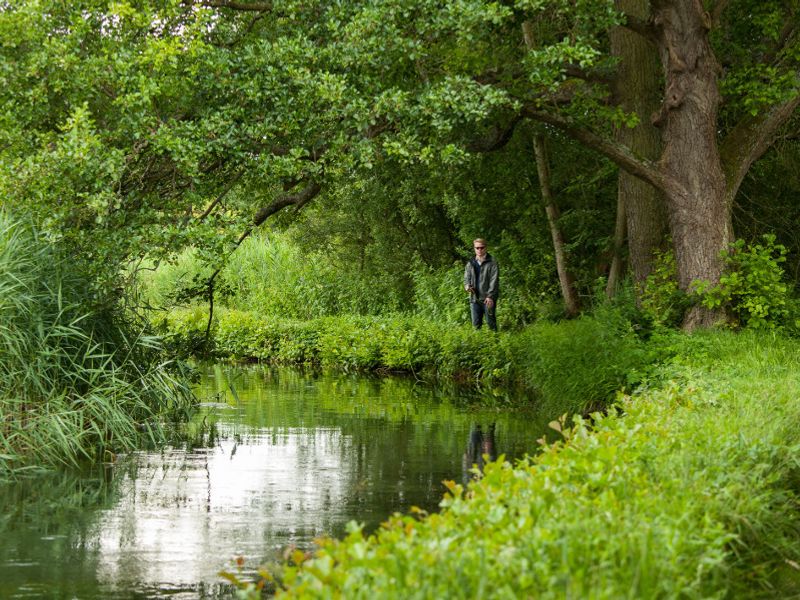
Bullington Manor Beat 1
The River Dever is a Hampshire chalk stream and is also known locally as the Bullington Stream. Bullington Manor Beat 1 sits on the upper Dever near Upper Bullington, a village the river passes through on its westward course from its source near Micheldever. The beat runs double-bank from just upstream of the old mill, though only one bank is prepared for fishing at any given point — anglers work the left bank upstream to the midway mark, then cross to fish the opposite bank back down, making it a particularly comfortable draw for left-handers. It is the narrowest of the Bullington Manor beats, with two well-defined hatch pools and a quieter, rarely pressured section beyond a disused railway viaduct. Up to six rods can be accommodated, though the intimate scale of the water suits smaller parties well. Like the other upper Test tributaries, the Dever is known for the clarity of its water, with fish highly visible as they hang in front of beds of starwort and tip up to sip passing insects. Brown trout, rainbow trout, and grayling are all present. The clear water lends itself to sight fishing with both dry fly and nymph, and the beat is rated suitable for beginners — the relatively straightforward bank configuration and visible fish make it a sound introduction to chalk stream fly fishing. The hawthorn hatch arrives in late April, the mayfly runs from mid-May to early June, and summer brings a variety of caddis, olives, and terrestrials. Grayling fishing extends the season through to 14 December. An 8½ ft rod with a 3–5wt floating line is the recommended outfit, with tippet down to 2lb/6x. Day rod prices run from £125 (grayling only) to £395 during the mayfly window. The beat shares a mill cabin with Beat 2, and car parking is on site. Additional cabin accommodation — including the Buckingham Palace fishing cabin and Dever Castle cabin — is available at the fishery.
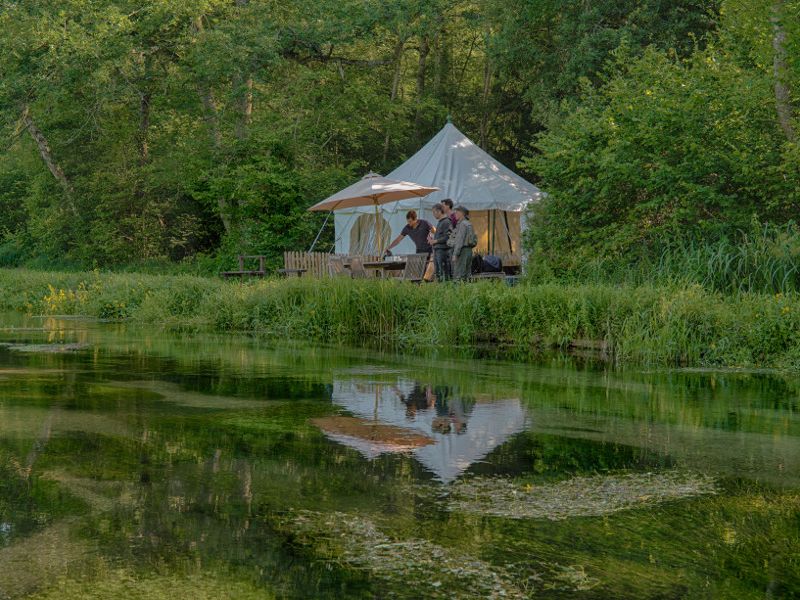
Bullington Manor Beat 2
Half a mile of single-bank chalk stream on the River Dever near Bullington in Hampshire, Beat 2 at Bullington Manor sits on one of the Test's most characterful tributaries. The Dever rises near West Stratton and flows for nearly 10 miles before joining the main river between Wherwell and Barton Stacey. Much narrower and more tightly enclosed than the main Test, the Dever demands stealth, light tackle, and precise upstream presentations. Like the other upper Test tributaries it is known for the clarity of its water, with fish highly visible, hanging in front of big beds of starwort and lazily tipping up to sip passing insects. This is intimate, exploratory water — the "adventurer" difficulty rating reflects a stream that rewards careful reading and punishes a heavy footfall. The beat holds brown trout, rainbow trout, and grayling, with moderate stocking supplementing resident fish through a season running 20 April to 14 October. The mayfly is the most celebrated hatch of the chalk stream season, a hatch that drives all river life crazy — ducks, dragonflies, and of course big trout — and Mayfly Season pricing (£395) reflects the premium those weeks command. The Large Dark Olive is one of the first main hatches of the season, usually brief each day but quite prolific, and these hatches inevitably get good trout moving. As August slips into September, cooler and damper weather spurs fresh hatches of olives, including the Blue-Winged Olive — a key period for both trout and grayling before the season closes. Dry fly and nymph are both permitted; fly only throughout. A fishing hut is on site. Up to six rods can be accommodated, making this a viable option for a small group day. A 9ft 3- or 4-weight is the practical choice for a river of this scale. Early and late-season day tickets start from £125 for grayling-only fishing, rising through £175 for the combined trout and grayling period.
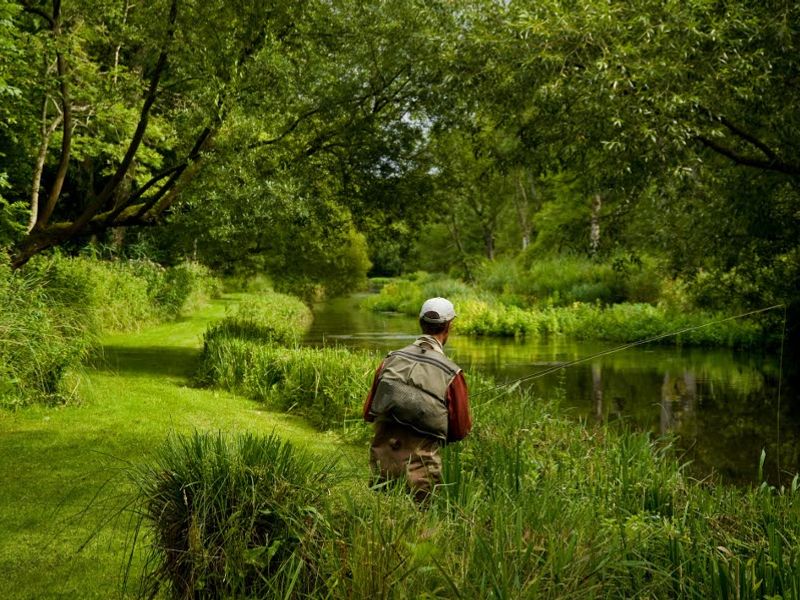
Bullington Manor Beat 3
Half a mile of single-bank dry fly and nymph water on the River Dever near Bullington, Hampshire, Beat 3 at Bullington Manor sits on one of the most intimate chalk stream tributaries in the Test system. The Dever rises at West Stratton near Micheldever and flows westwards for 11 miles to meet the Test at Wherwell, passing through Upper and Lower Bullington along the way. Narrower and more tightly enclosed than the main Test, the Dever demands stealth, light tackle, and precise upstream presentations. At Bullington the river is an exquisite example of a chalk stream — its water astonishingly clear and gentle-flowing, allowing individual fish to be observed in detail. Fish are highly visible, hanging in front of beds of starwort and tipping up from time to time to sip passing insects. The beat targets brown trout, rainbow trout, and grayling on a fly-only, lightly stocked basis, and is rated expert — this is sight-fishing water where presentation and reading the fish matter far more than covering the bank. The river has good hatches of the main groups of upwinged flies, and in recent years Grannom have reportedly made a reappearance. Mayfly season (priced at £395) is the peak window, with olives and blue-winged olives carrying the fishing through summer and into the grayling season from late September. The season runs 20 April to 14 Oct, with day rod prices ranging from £125 for grayling-only days up to £395 during Mayfly. Habitat restoration work near Bullington has created pools with gravel glides at their tails, new riffles, and pinched channel sections that give the beat varied character and defined lies. Up to six rods can be accommodated, and a fishing hut is available on site. Bank fishing only; waders are not required but are useful for approaching fish on the far bank.
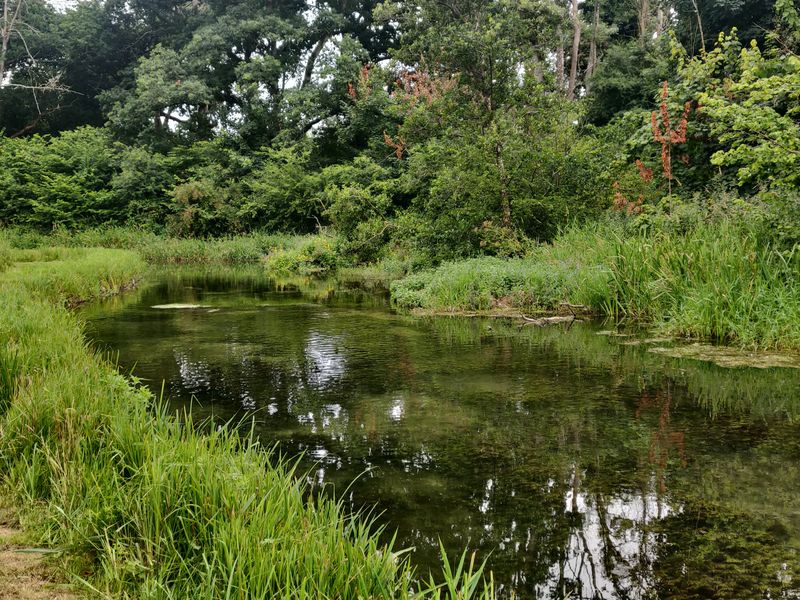
Bullington Manor Beat 4
Half a mile of fly-only water on the River Dever near Bullington, Beat 4 sits on one of the Test's most characterful major tributaries — a chalk stream that rises near West Stratton and flows for nearly ten miles before joining the main river between Wherwell and Barton Stacey. Much narrower and more tightly enclosed than the main Test, the Dever demands stealth, light tackle, and precise upstream presentations — and the Bullington stretch, fished from the bank only, exemplifies that character. Like the other upper Test tributaries, the Dever is known for the clarity of its water, with fish highly visible, hanging in front of big beds of starwort and tipping up to sip passing insects. The beat holds brown trout, rainbow trout, and grayling, and is heavily stocked through the season. Fishing is dry fly and nymph only. Grannom is the first sedge to hatch in spring, emerging in April and lasting around two weeks — a useful early-season trigger on a beat that opens 20 April. The mayfly hatch in late May and early June is the headline event, reflected in the Mayfly Season day ticket of £395. Through summer, the Dever comes alive during evening hatches of olives, and the blue-winged olive can be found on the water all summer, with June and September known for the heaviest hatches, the emergence typically beginning in the late afternoon or early evening and continuing until dark. Grayling extend the season to 13 December, with day tickets from £125. The beat is rated Adventurer difficulty — the Dever's intimate, enclosed nature rewards experienced anglers who can read the water and place a fly accurately. Up to six rods can fish the beat on any given day, with a fishing hut on site providing shelter and a base for the day. A 9ft 3- or 4-weight rod with a long, fine leader suits the conditions well. Day tickets run from £125 in the grayling-only period to £395 during mayfly. The Dever is around one hour thirty minutes by road or train from London, making it a practical destination from most of southern England.
Bransbury Mill Fishery
Sitting on the lower River Dever near the hamlet of Bransbury in Hampshire, Bransbury Mill Fishery offers around 1.5 miles of double-bank chalk stream fly fishing, with the beat running through disused water meadows on Bransbury Common — a Site of Special Scientific Interest — through which the Dever flows. The Dever is one of the major River Test tributaries, rising near West Stratton and flowing for nearly 10 miles before joining the main river between Wherwell and Barton Stacey. This is intimate, narrow chalk stream fishing: the river runs clear over gravel, and like other upper Test tributaries it is known for the clarity of its water, with fish highly visible, hanging in front of beds of starwort and tipping up to sip passing insects. Brown trout are the primary quarry, with a healthy stock of wild fish supplemented by fishery-reared browns. The beat carries a substantial stock of wild brown trout, and judicious over-winter feeding has ensured the wild population is in prime condition at the start of the season. Hatches are a strong feature throughout the season, starting with hawthorn in spring, prolific mayfly during May and June, and good hatches of olives and sedges through summer and autumn. Grayling fishing can be enjoyed after the trout season ends. The clear water and visible fish make this an accessible beat for developing dry fly anglers, with the classic chalk stream approach — spot, stalk, cover — well suited to the conditions. The trout season runs from 1st May to 30th September. Upstream dry fly only applies in May and June; nymphing is permitted from 1st July. All grayling must be returned, and brown trout under 14 inches returned too. The beat is limited to two rods. Rods can fish from both banks and have use of a comfortable lunch hut and rain shelter. Car parking is off Newton Lane — note there is no vehicular access to Bransbury Common itself, so waders are advisable for reaching the water.
About the River Dever
River Dever at a glance
- Length
- 11 miles
- Source
- West Stratton, near Micheldever, Hampshire
- Mouth
- Confluence with the River Test at Wherwell, Hampshire
- Tributary of
- River Test
- Country
- United Kingdom
- Water type
- chalk stream
- Website
- Visit website
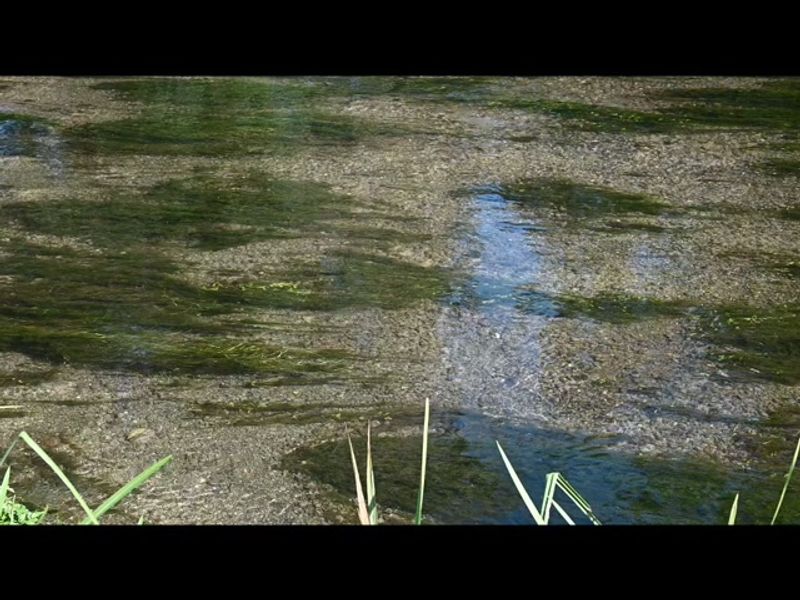
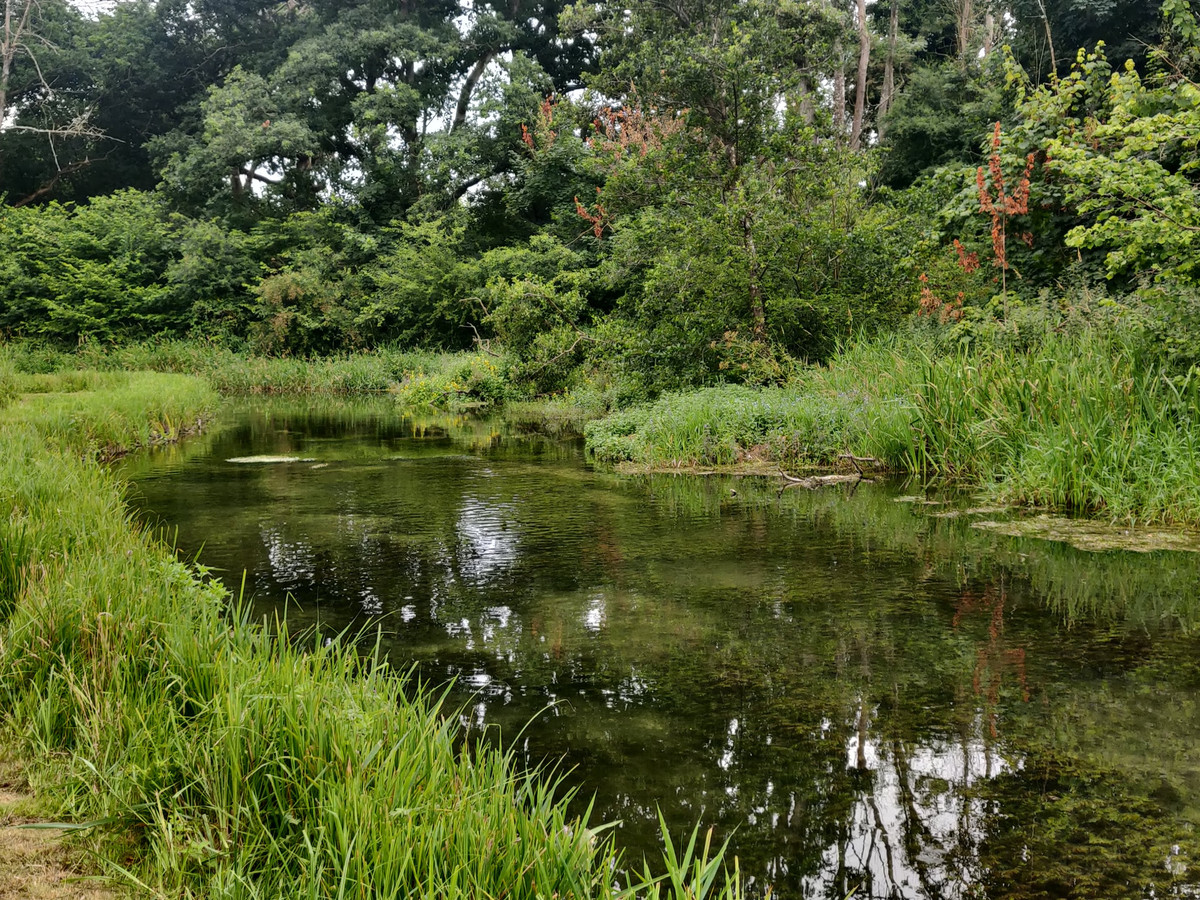
A compact Hampshire chalk stream, the River Dever rises at West Stratton near Micheldever and runs westward for 11 miles through Micheldever, Sutton Scotney, and the hamlets of Weston Colley and Wonston before skirting Barton Stacey and passing through Bransbury, where it meets the River Test on Bransbury Common at Wherwell. Fed directly by chalk aquifers, it carries the characteristic clarity and steady temperature of a true groundwater stream, narrow and intimate throughout its length. The lower river flows through Bransbury Common, a Site of Special Scientific Interest encompassing the Common itself and disused water meadows, where peat-over-gravel soils support a rich mix of meadow grassland, sedge communities, and chalk stream flora. The River Dever has a documented connection to F. M. Halford, the Victorian dry fly theorist whose work on the nearby Test shaped the conventions of upstream dry fly fishing still followed on these rivers today.
The fishing is built around clear-water sight fishing to , with fish visible over beds of starwort and ranunculus, tipping up to intercept surface food. Upstream dry fly and nymph are the expected methods. The river carries good hatches of upwinged flies through the season, and grannom have been reported in recent years. Grayling fishing runs from 1 November to 28 February, and the Dever is well regarded for winter sight fishing on day rods or guided trips. Grayling day tickets are available from £125. Flow levels are worth checking before booking in a dry summer, as the river has been affected by abstraction from the chalk aquifer more noticeably than some neighbouring streams.
There are currently 5 beats listed on the River Dever, spread across 0 fisheries. The Newton Stacey Estate holds some of the most notable water, where the Dever and Test meet in a Y-shaped confluence with the Dever forming the eastern arm. Trout season day tickets start from £225.
FAQ
River Dever FAQs
Common questions about fishing the River Dever, from day tickets and seasons to what to expect on the bank.
01Can I fish the River Dever?
02How much does it cost to fish the River Dever?
03When is the fishing season on the River Dever?
04What fish can I catch in the River Dever?
05Do I need a licence to fish the River Dever?
Articles about the River Dever
Chalkstreams
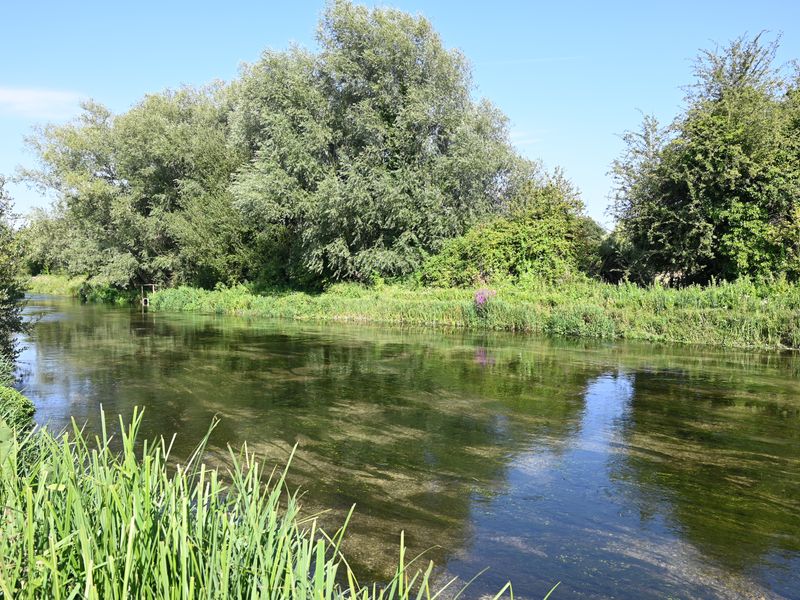
Why Chalk Streams Are Clear, Cold and Full of Fish
Why chalk streams run clear, hold their temperature all year and fish the way they do, from the aquifer up. England holds 85% of the world's chalk streams.
Locations
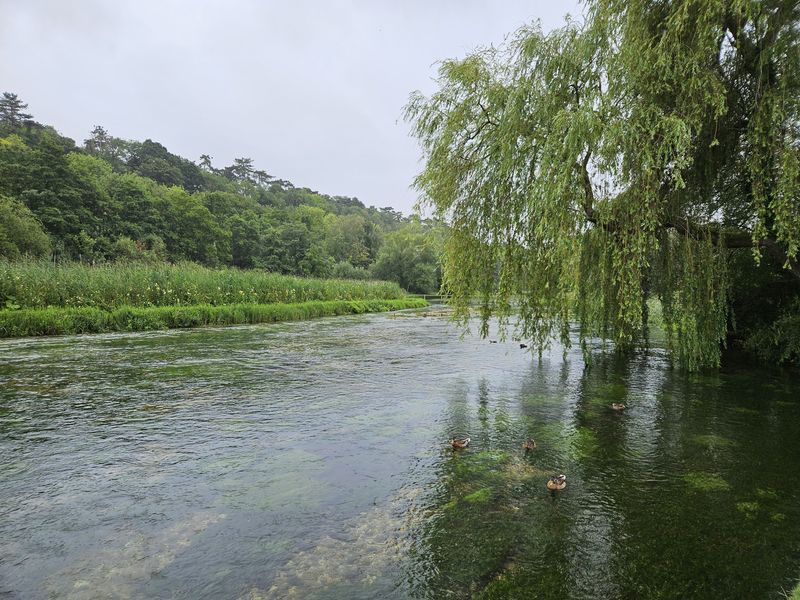
Beginner-friendly chalk stream beats to start with
You don't need years behind the rod to fish a chalk stream. These six beats, one on each of the south's best-known rivers, are forgiving places to book a first day.