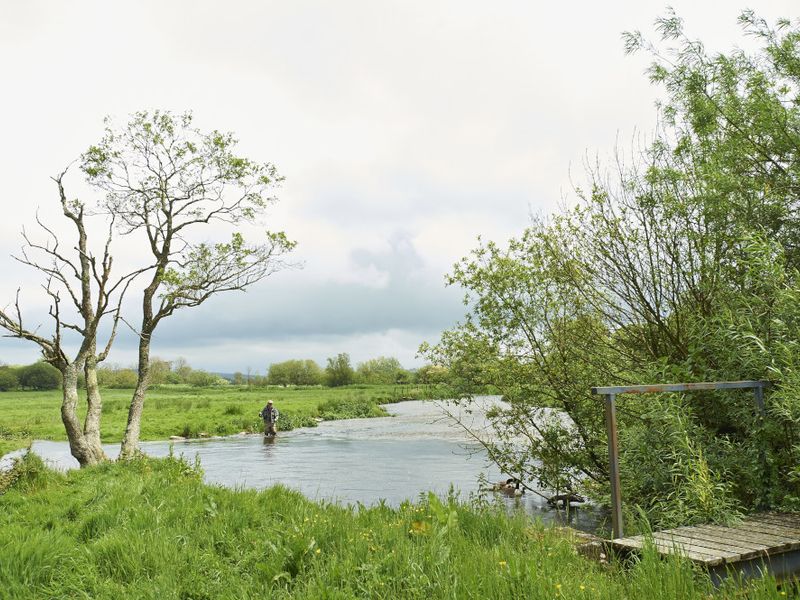
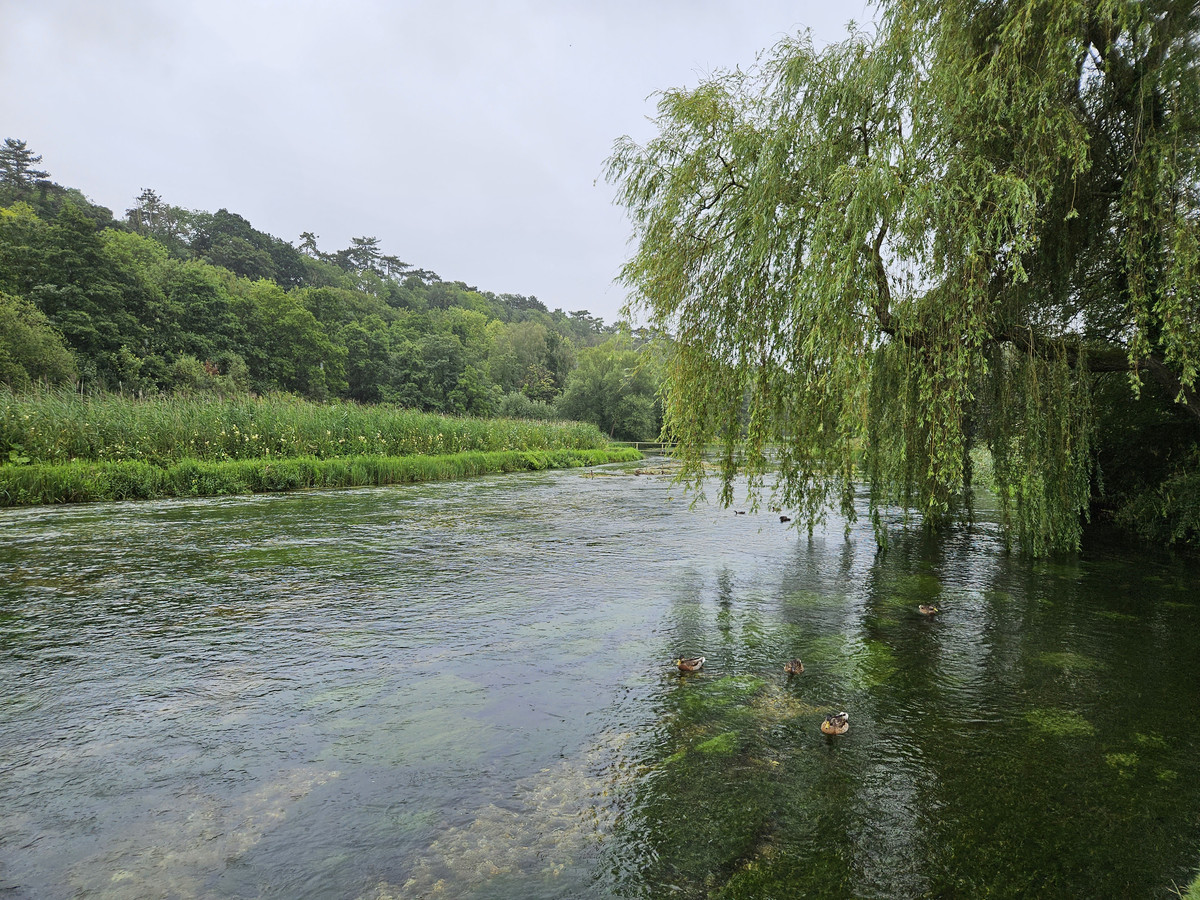
A chalk stream doesn't require years behind the rod. What it does require is the right water: somewhere with open banks, visible fish, a bit of forgiveness built into the day, and someone on hand to answer questions when you need them. That combination exists on more beats than most beginners realise.
The markers of a beginner-friendly beat are fairly consistent. Day-ticket access rather than a waiting list, well-stocked fish that are willing to eat, casting lanes free of overhanging trees, and ideally a ghillie or a lodge where you can hire a rod if you haven't yet bought your own. Many also offer tuition. You can walk onto some of these rivers having never fished a chalk stream before and leave with a fish, a better cast, and a clear idea of why people spend their lives coming back.
There are dozens of beats across the south of England that fit this description. The live map of beginner-friendly beats has the full, always-current list. The six below are a starting point.
River Test
The Parsonage
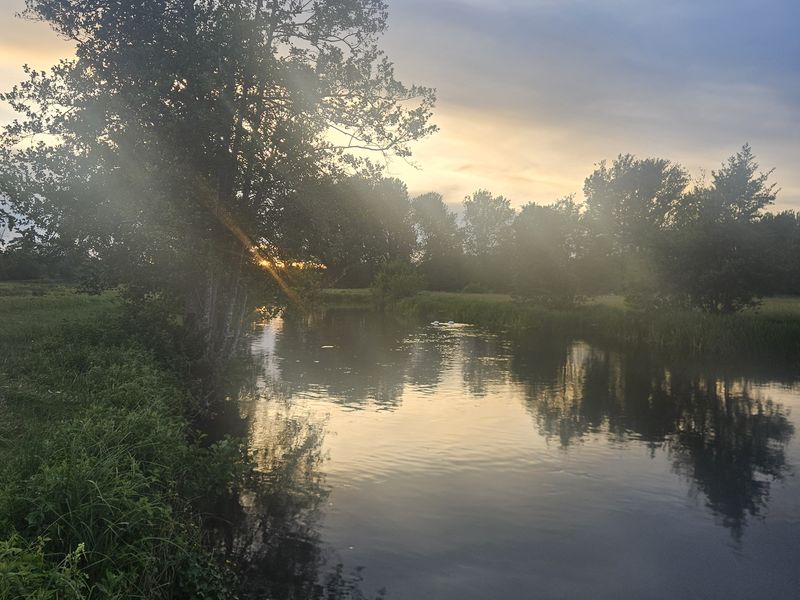
Situated on the magnificent Middle River Test just downstream of Timsbury, The Parsonage Beat offers a wonderfully diverse and secluded chalk stream experience. This highly regarded fishery provides the perfect "best of both worlds" scenario, combining the classic, beginner-friendly dimensions of the main river with the engaging waters of a long carrier stream, making it an absolutely idyllic setting for a relaxed family day out. The expansive main river section provides a highly accessible and forgiving environment, making it an excellent place for novices and younger family members to hone their casting skills and build confidence. It features sweeping glides and notably deep holding water beneath wooded far banks. Because of this depth, sight-fishing is not the easiest, but the open nature of the river presents a wonderfully relaxed environment to practice reading the water and covering likely lies without the stress of tight, technical casting. In wonderful contrast, the expansive carrier stream offers a more intimate chalk stream environment. Its peaty banks and clean gravel sections provide richly varied sport and a slightly different pace alongside the main flow. Complete with excellent facilities for entertaining, the beat boasts a comfortable riverside Cabin, a BBQ area perfect for a family riverside lunch, and a quaint thatched shelter at the top boundary. Whether you are introducing beginners to the sport on the forgiving main river or simply enjoying a group outing, The Parsonage provides a deeply relaxing day of dry fly and nymph fishing tailored for all ability levels.
The Parsonage sits on the Middle Test just below Timsbury, a forgiving stretch of main river with sweeping glides and deep holding water, plus a narrower carrier stream that runs alongside. Up to six rods fish about a mile of water, and a ghillie is available for those who want a steer. The approach suits beginners: the water is open, the fish hold in predictable lies, and it's comfortable enough for families to spend a day.
A thatched shelter, a riverside cabin, and a BBQ area mean there is somewhere proper to sit and watch the water between fish. Dry fly and nymph both work well here, and day tickets are available.
River Itchen
East Lodge Beat
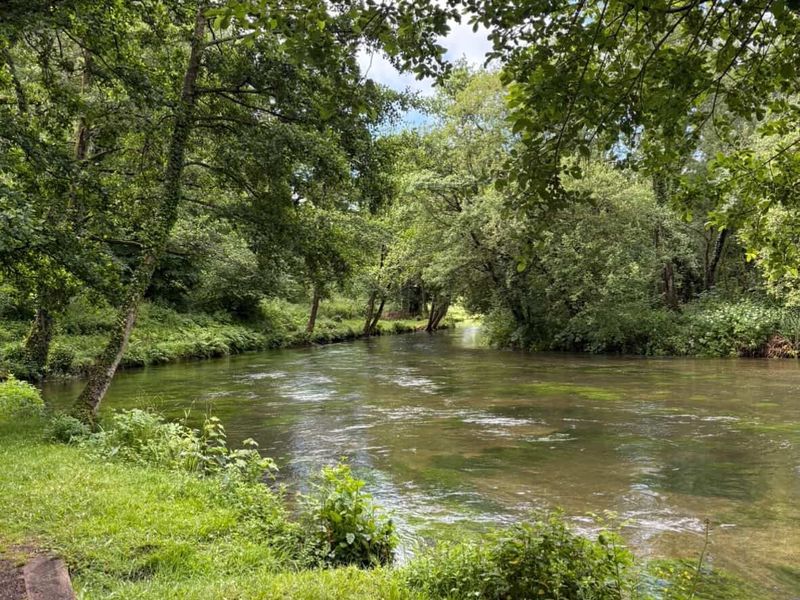
Set just south of Twyford in Hampshire, East Lodge is a beat on the River Itchen with a fishing history stretching back to the 17th century. The estate water covers two miles of double-bank chalk stream, comprising both the main river and a fast-flowing side stream called Rosemary's Leat, which bisects the surrounding water meadows. The Itchen carries the highest conservation designations, being both a Site of Special Scientific Interest (SSSI) and a Special Area of Conservation (SAC), typifying the classic chalk river with only a narrow range of seasonal variation in physical and chemical characteristics — the water is naturally base-rich, of great clarity, and maintains a relatively constant temperature with dissolved oxygen levels at or near saturation. The water is varied and suits both novice and expert. The river is stocked with brown trout only, but also supports a very large population of wild trout and grayling, testament to the quality of habitat management on the beat. Insect hatches, particularly blue-winged olive and sedge, are prolific throughout the season, offering reliable dry fly action, while the mayfly period typically begins around 15 May and represents the most sought-after weeks on the water. As a general rule, warmer months favour trout fishing and the cooler months grayling. Mayfly hatches on the Itchen are generally lighter than on the River Test, but the river is well blessed with fly life throughout the season. The beat accommodates up to ten rods and is well set up for corporate and group days, with a fishing lodge, on-site catering, and equipment hire available — making it a practical choice for less experienced anglers coming to chalk stream fly fishing for the first time. The Itchen has its own place in fly fishing history: it was here that George Skues developed the principles of nymph fishing that remain central to the sport today. A 9 ft 5-weight is a sensible starting point; the gin-clear water rewards a careful, upstream approach — if you can see the trout, they can see you.
East Lodge Beat lies just south of Twyford on some of the clearest chalk-stream water in Hampshire, a designated SSSI and SAC, which tells you something about the condition of the river. The beat runs to two miles of double-bank water and holds both stocked brown trout and a healthy population of wild fish and grayling. A ghillie is available, and there is a fishing lodge on site with catering and equipment hire, which makes it realistic for a first-timer who hasn't yet assembled full kit.
The beat has prolific blue-winged olive and sedge hatches, and mayfly from around 15 May. A 9ft 5-weight is a sensible starting rod. One thing worth knowing: the Itchen is gin-clear and the trout are sharp. If you can see them, they can see you. Careful upstream approaches matter here more than most, which makes it a good place to learn the discipline early. This is also the water where G.E.M. Skues worked out much of what we now call nymph fishing.
River Kennet
Avington Estate Beat
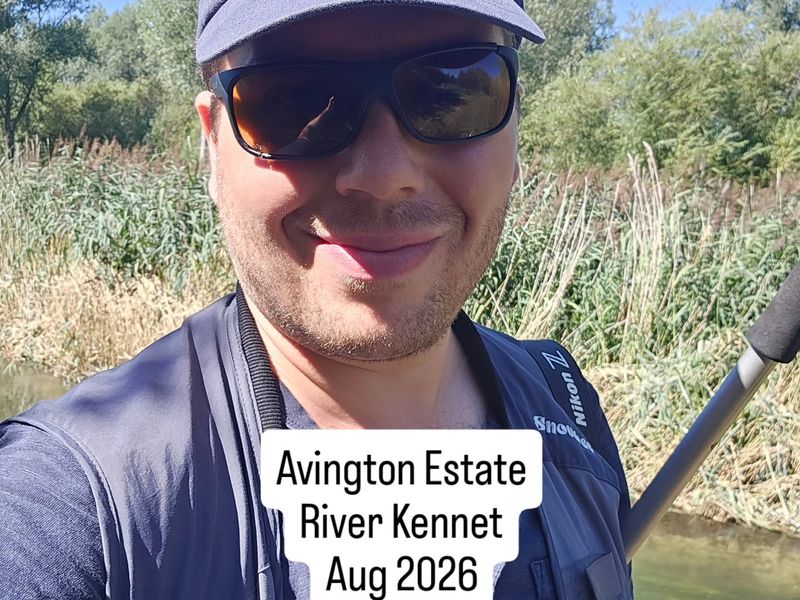
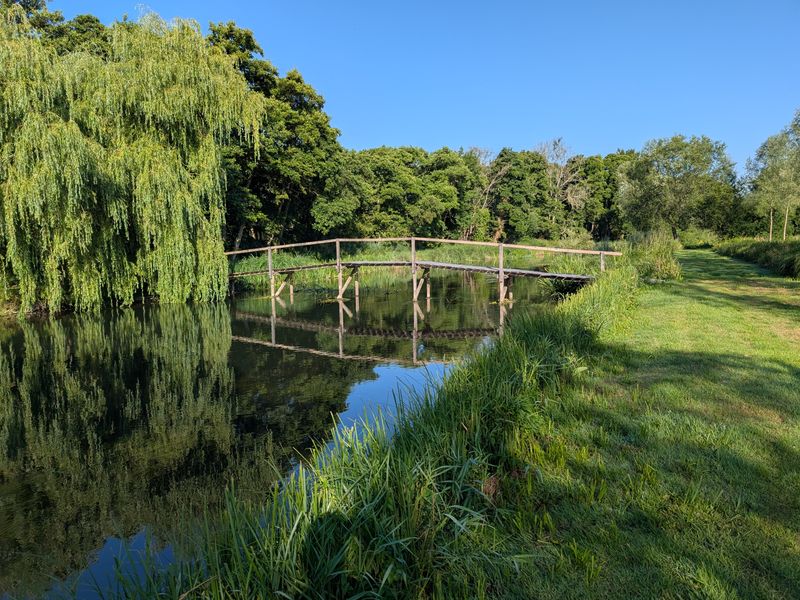
Four miles of chalk stream on the Avington Estate near Hungerford, Berkshire, covering the main River Kennet and an intricate network of carriers — the kind of labyrinthine system created by 18th-century water engineers that gives the Kennet far more than its road-map length suggests. The fishery comprises the Kennet and its twisting carriers, and the water is fished on an exclusive-use basis, with all rods sharing the full four miles rather than rotating through individual beats. The Kennet here is a fairly big river by chalk stream standards, offering a mix of open glides, faster riffles, and intimate carrier channels. Brown and rainbow trout are the target species, fished upstream on dry fly and nymph. The season at Avington runs from 1 April through to 30 September. There is a great variety of fishing to suit all levels of experience throughout the season, including what is most often a spectacular mayfly hatch. Olive hatches in spring are combined with grannom, and the mayfly is followed by some excellent evening fishing through the summer months as caddis flies gather. Because the Kennet runs slightly cooler than most other chalk streams, the mayfly hatch tends to start a little later, creating a longer and more sustained hatch throughout late spring and early summer. The beat is well stocked and suited to beginners, with the carrier network offering sheltered, manageable water alongside the more demanding main river. Avington offers one of the best fishing lodges on the whole of the Kennet — once a cricket pavilion, it was dismantled and moved to its current riverside location, and is filled with old fishing rods, cased fish, and trophy pictures of many happy anglers. A fully catered riverside luncheon is included. Group bookings and corporate days can be arranged on a limited number of Mondays throughout the season, with the fishery and hut able to accommodate groups of up to twelve. A 9 ft four-weight rod is the standard tool for this water.
Avington Estate Beat near Hungerford in Berkshire gives access to four miles of the main Kennet plus a network of smaller carrier channels. The carriers are what make this useful for beginners: sheltered, intimate water where the casting distances are short and the fish are visible without being impossible. The bigger main river offers a different challenge alongside, so there is room to move through the day as confidence builds. The season runs 1 April to 30 September, and brown and rainbow trout are fished upstream on dry fly and nymph.
The lodge, a converted cricket pavilion, provides a catered lunch that sets the day up nicely. A 9ft 4-weight is the standard tool on this water, and day tickets are available.
River Frome
Stratton Beat
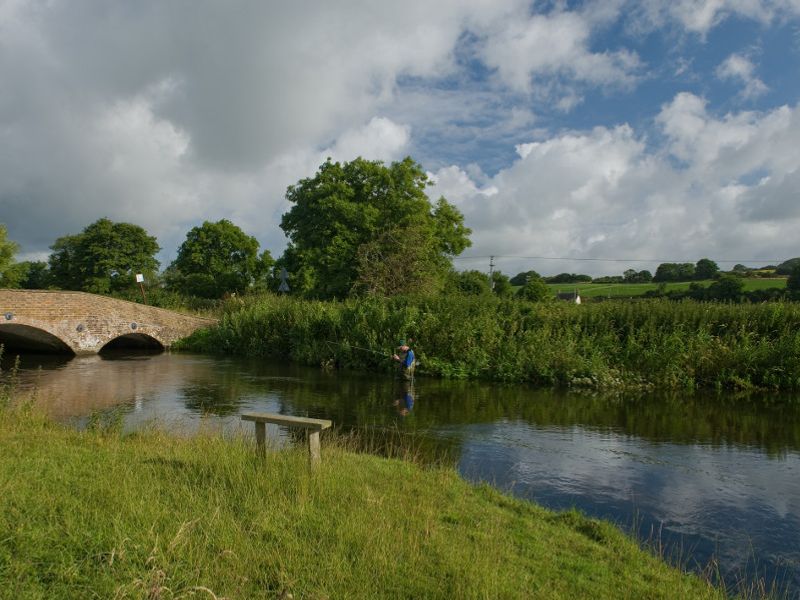
Just under two-thirds of a mile of double-bank dry fly and nymph water on the River Frome, the major chalk stream of southwest England, the Stratton Beat sits on the quiet water meadows south of Stratton village in Dorset. The beat opens with straighter, faster water near the top before the river broadens into long, sweeping bends with deep pools running down to the bottom boundary — a varied character that suits up to two rods without crowding. The Frome and its tributaries provide a rich habitat for wild brown trout and grayling, and stocking is virtually non-existent along much of the river, which allows wild trout and grayling to thrive. The Frome is less affected by abstraction than most chalk streams, and the season opens with fine hatches of upwinged flies in April and early May; mayfly hatches are excellent from mid-May until mid-June, with high-summer evenings producing pale wateries, blue-winged olives and sedges extending well into autumn. The season opens with a grannom hatch, followed by hawthorn, mayfly and blue-winged olives as the season progresses, with sedges rounding off the year. The beat's long trout season runs from 1 April, with grayling fishing continuing through to 31 January — late summer and autumn grayling fishing is primarily sight nymphing, with methods turning to deeper nymphing techniques through winter. Day ticket prices range from £75 for grayling to £190 during the mayfly window, reflecting the beat's seasonal variety. A thatched fishing hut with toilet facilities is on site, and accommodation is available, making Stratton a practical base for a multi-day visit. A 7–9 ft rod with a 3–4 weight floating line and fine tippet down to 6x covers most situations on this accessible, beginner-friendly beat.
Stratton Beat is on a Dorset river that doesn't always make it onto beginners' lists, but it should. The beat runs to about two-thirds of a mile of double-bank water south of Stratton village, fished by two rods. It holds wild brown trout and grayling alongside stocked fish, and a ghillie is available. The long season is one of its advantages: trout from 1 April, grayling through to 31 January, so there is no narrow window in which to cram a first trip.
Day tickets run from £75 for grayling fishing up to £190 during the mayfly window. A 7 to 9ft rod in a 3 or 4-weight with a fine tippet suits the water. There is a thatched hut with a toilet on site, and accommodation is available nearby. The fishery describes the beat as accessible and suitable for beginners.
River Dever
Bransbury Mill Fishery
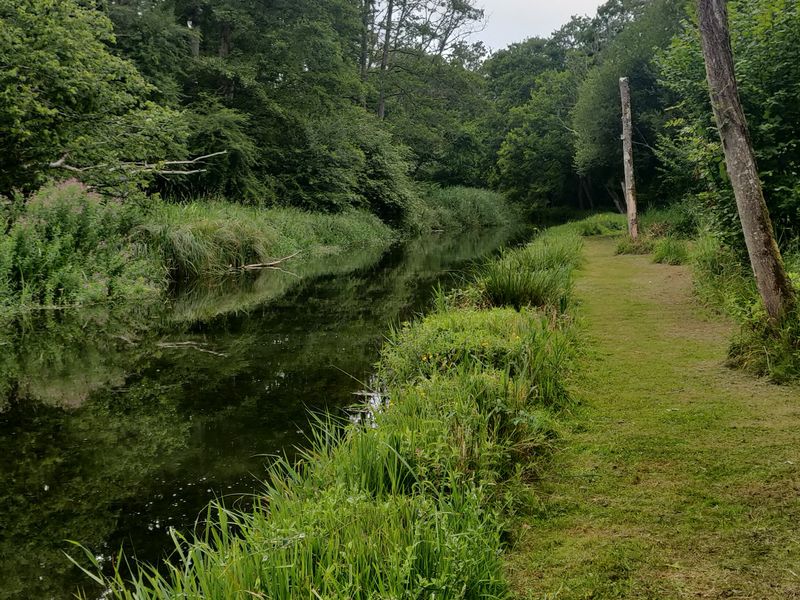
Sitting on the lower River Dever near the hamlet of Bransbury in Hampshire, Bransbury Mill Fishery offers around 1.5 miles of double-bank chalk stream fly fishing, with the beat running through disused water meadows on Bransbury Common — a Site of Special Scientific Interest — through which the Dever flows. The Dever is one of the major River Test tributaries, rising near West Stratton and flowing for nearly 10 miles before joining the main river between Wherwell and Barton Stacey. This is intimate, narrow chalk stream fishing: the river runs clear over gravel, and like other upper Test tributaries it is known for the clarity of its water, with fish highly visible, hanging in front of beds of starwort and tipping up to sip passing insects. Brown trout are the primary quarry, with a healthy stock of wild fish supplemented by fishery-reared browns. The beat carries a substantial stock of wild brown trout, and judicious over-winter feeding has ensured the wild population is in prime condition at the start of the season. Hatches are a strong feature throughout the season, starting with hawthorn in spring, prolific mayfly during May and June, and good hatches of olives and sedges through summer and autumn. Grayling fishing can be enjoyed after the trout season ends. The clear water and visible fish make this an accessible beat for developing dry fly anglers, with the classic chalk stream approach — spot, stalk, cover — well suited to the conditions. The trout season runs from 1st May to 30th September. Upstream dry fly only applies in May and June; nymphing is permitted from 1st July. All grayling must be returned, and brown trout under 14 inches returned too. The beat is limited to two rods. Rods can fish from both banks and have use of a comfortable lunch hut and rain shelter. Car parking is off Newton Lane — note there is no vehicular access to Bransbury Common itself, so waders are advisable for reaching the water.
Bransbury Mill Fishery sits on an especially quiet stretch of the Dever, a tributary of the Test, near Bransbury in Hampshire: about 1.5 miles of double-bank water, two rods, on a Site of Special Scientific Interest. The river is narrow and clear, and stocked fish share the water with a strong wild brown trout population. You can see individual fish from the bank and plan your approach, which is exactly how beginners should learn to fish a chalk stream: spot the fish, stalk it, cover it carefully.
The trout season runs 1 May to 30 September. Upstream dry fly only applies in May and June, and nymph is permitted from 1 July. Parking is off Newton Lane, and waders are advisable to reach the water in places. Day tickets are available.
Hampshire Avon
Upper Woodford Valley Beat
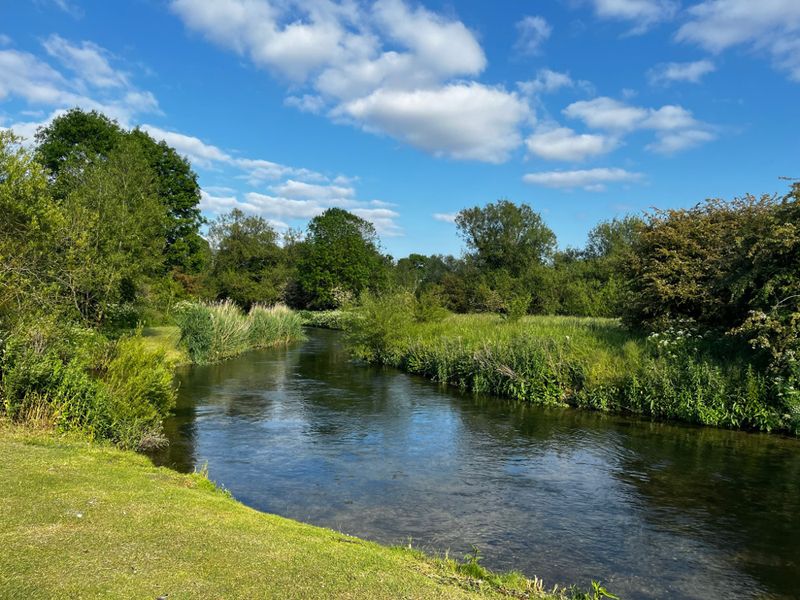
Half a mile of chalk stream on the Hampshire Avon, the Upper Woodford Valley Beat sits in the Woodford Valley north of Salisbury — the stretch of river that runs through chalk down the valley toward Salisbury and one of the most historically significant reaches of fly fishing water in England. The upper Avon through the Woodford Valley was home to Frank Sawyer and Oliver Kite, and it is from their observations on this river that numerous fly fishing innovations emerged that continue to shape the sport worldwide. The beat is bank-only, available to one or two rods, and fished entirely catch and release. Brown trout and grayling are the target species, with light stocking supplementing a resident population of fish. The season opens on 15 April in time for early hatches of grannom and large dark olives, and the Avon is known for consistently good fly hatches — particularly the mayfly (Green Drake), which once started can continue for many weeks. The hawthorn hatch arrives in late April, with the mayfly running from mid-May into early June. All the usual upwinged flies are present throughout the season. Dry fly and nymph are both permitted, making this a versatile beat that suits upstream dry fly in the calmer summer months and induced-take nymph tactics as the season progresses toward the 30 September close. A 9-foot rod in a 4- or 5-weight is the standard choice for this type of water. The beat is rated beginner-friendly, with open bank access and straightforward wading-free fishing making it a sound introduction to chalk stream fly fishing. On-site amenities include a fishing shelter, outside furniture, and tea and coffee facilities — practical comforts that make a full day on the bank comfortable regardless of the weather.
Upper Woodford Valley Beat is on the Hampshire Avon in the Woodford Valley north of Salisbury, half a mile of bank-only fishing for one or two rods on lightly stocked water over a resident population, fished catch and release. There is no wading, so the logistics are simple for a first visit, which matters more than it sounds when you are already concentrating on casting, presenting the fly, and reading the water all at once.
The season opens 15 April, with mayfly from mid-May into early June. Both dry fly and nymph are permitted, and a 9ft 4 or 5-weight is standard. There is a shelter on site with tea and coffee. The beat is the home water of Frank Sawyer and Oliver Kite, two of the figures who shaped modern nymph fishing.
The most useful thing a beginner can do on a chalk stream is slow down. Watch the water for ten minutes before lifting a rod. The fish will show you where they are.
Finding more
Any of these six is a reasonable place to start. For something closer to home, or a beat that fits a particular month or budget, the full list will narrow it down.