UK Chalk Stream Rivers

England holds approximately 85% of the world's chalk streams. These rare freshwater rivers, fed by chalk aquifers, run clear, cool, and stable year-round, supporting wild brown trout, grayling, and a rich insect life. Browse the rivers below to explore their hatches, fishing seasons, and the beats available for booking.

River Test
67 beats →
11 fisheries

Hampshire

River Test

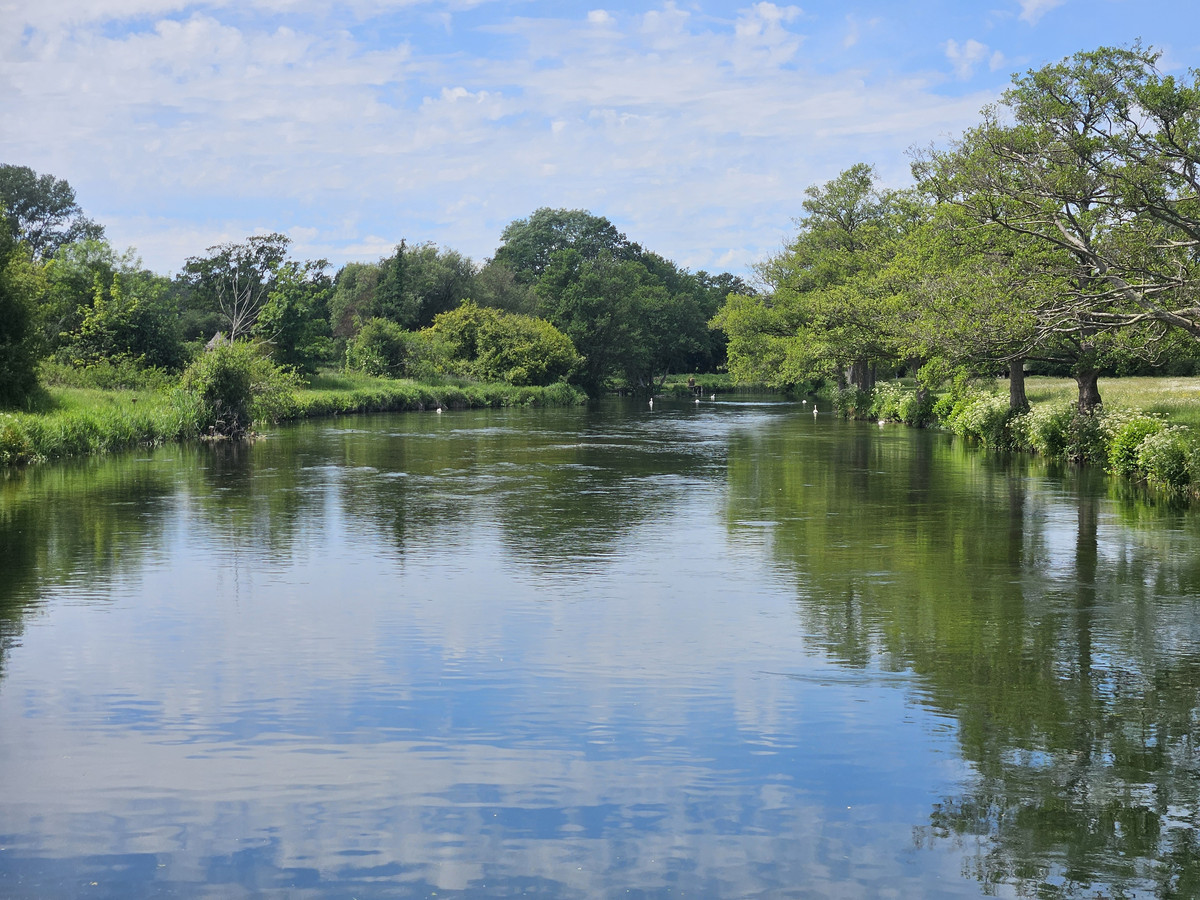
Rising at Ashe, near Overton, the River Test runs for 40 miles through Hampshire, flowing west through Overton, Laverstoke, and Whitchurch before turning south through Longparish, Wherwell, and Chilbolton, where the Rivers Dever and Anton join the main channel. From there it passes Leckford, Longstock, Stockbridge, and Houghton to Mottisfont and Kimbridge, where the River Dun adds its flow, before reaching Romsey and eventually emptying into Southampton Water. Sweeping water meadows, mill leats, and a powerful main channel define the valley; at some points two, three, or even four streams run parallel, all fishable, and it can be difficult to distinguish carrier from main river. The Test is one of only 12 chalk streams classified as a Site of Special Scientific Interest and one of only six that supports Atlantic salmon. It was on the Test that Frederick Halford honed the ideas that effectively invented modern dry fly fishing in the late 1800s, and the river's character still rewards that approach. Grannom and hawthorn fly kick the trout season off in spring, with grannom — a small species of sedge — often producing the first significant hatches. Spring then heralds the emergence of mayfly, creating a feeding frenzy for trout that draws anglers from across the country. Wild brown trout are the primary quarry on dry fly and upstream nymph throughout the season, with grayling providing sport into winter. The river holds good populations of wild brown trout and grayling alongside stocked fish, and the salmon beats carry genuine holding pools. The Test is recognised as particularly sensitive to phosphate pollution, and ongoing conservation efforts by riparian owners and river keepers remain central to maintaining its ecology. With 58 beats and 10 fisheries listed on FishingBeats, access to the Test is broader than its private reputation might suggest. Dozens of fishing clubs and lodges line the banks, and many beats do not require wading. Notable fisheries include Kimbridge, set within 400 acres of Hampshire countryside and offering seven miles of bank across the main river and the River Dun, and the Broadlands Estate, where two and a half miles of water are divided into dedicated trout and salmon beats. Day rods, season rods, and syndicate shares are all available across the valley.

40 miles chalk stream
River Kennet
12 beats →
2 fisheries

Berkshire · Wiltshire

River Kennet

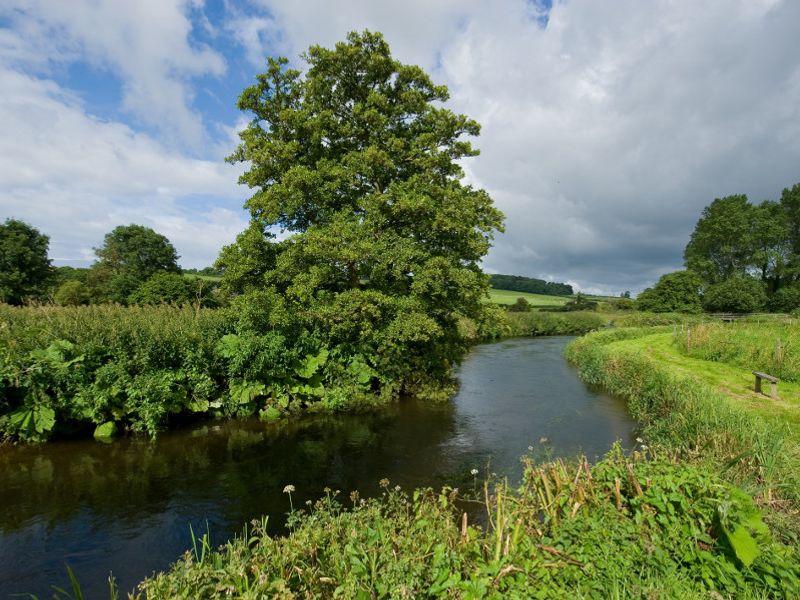
Rising west of Avebury from Swallowhead Springs near Silbury Hill, the Kennet flows 45 miles east through Wiltshire and Berkshire — through Marlborough, into Berkshire at Hungerford where the Kennet and Avon Canal joins its course, on through Newbury where the River Lambourn enters, and then eastward past Thatcham to Reading — where it enters the Thames above Sonning Lock. Ecologically, it is one of England's premier chalk streams, characterised by clear, naturally low-nutrient water that supports wild brown trout, grayling, and aquatic plants like water crowfoot; much of its upper course from Marlborough to Woolhampton is designated as a biological Site of Special Scientific Interest. Though it is only 22 miles from source to Newbury, 18th-century water engineers created more than 80 miles of fishable water through a maze of carriers. The Kennet is known for offering wonderful dry fly fishing for both trout and grayling. Olive hatches in spring combine with grannom and hawthorn before the mayfly arrives; the mayfly hatch is followed by excellent evening fishing through summer as caddis flies gather and adult olives return to lay their eggs. The river is renowned for some of the finest hatches in the UK — because its waters run slightly cooler than most other chalk streams, the mayfly hatch tends to start a little later, producing a longer and more sustained hatch through late spring and early summer. The river features heavily in fly fishing literature: Halford held a lease on a considerable length of water in the late 1800s, and John Waller Hills wrote regularly about the native Kennet trout, the 'greenback' — a distinct wild brown trout strain still present on the Berkshire/Wiltshire border, where the Eastridge Estate won the Wild Trout Trust's 2014 Conservation Award for its fast-flowing, gravel-bedded chalk stream habitat. Water flows can vary due to over-abstraction from the aquifers, and ongoing sewage pollution in the Kennet catchment, overseen by Thames Water, has raised significant concerns from the Angling Trust and Action for the River Kennet (ARK). FishingBeats lists 12 beats across the Kennet, with 2 dedicated fisheries on the river itself. Notable named estates include Barton Court and Benham Estate on the main river

45 miles chalk stream
River Itchen
11 beats →
1 fishery

Hampshire

River Itchen

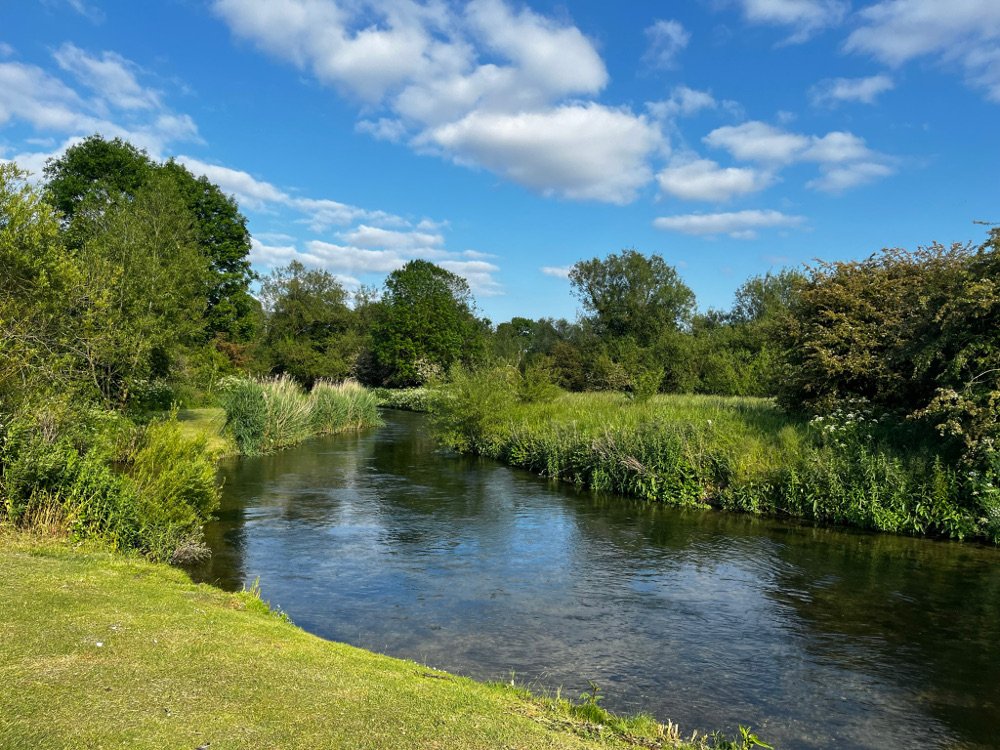
Rising from chalk springs south of New Cheriton, the Itchen runs 28 miles through the Hampshire Downs before winding through the villages of Itchen Abbas and Itchen Stoke, entering the cathedral city of Winchester via ancient water meadows, and continuing south past Mansbridge to its tidal mouth at Southampton Water. Fed by the Candover Stream, River Alre, and Cheriton Stream, the river emerges from porous chalk bedrock, creating a stable, nutrient-rich habitat that filters water over millennia. The Itchen is designated both a Site of Special Scientific Interest (SSSI) and a Special Area of Conservation (SAC), and recent monitoring has identified phosphorus concentrations exceeding targets in parts of the catchment — a pressure that conservation bodies and riparian owners are actively working to address. The practice of modern fly fishing developed along these waters in the 19th century, with the river serving as a testing ground for dry-fly techniques that were revolutionary at the time. F. M. Halford fished here, alongside the enigmatic G. S. Marryat, who is believed to have greatly influenced Halford's ideas and thinking. That heritage still shapes how the river is fished today. Fly selection revolves around olives, caddis, terrestrials, and a prolific mayfly hatch, with most anglers preferring to stalk rising fish on the dry fly, though nymphs also perform well where the rules allow. Hatches of blue-winged olive and sedge are particularly prolific, offering reliable dry fly action throughout the season. Mayfly hatches are generally lighter here than on the Test or Avon systems, but the river holds strong populations of wild brown trout and grayling, with Atlantic salmon and sea trout present in the lower reaches. The river between source and Winchester is primarily run by clubs and syndicates, with day rods only occasionally available. Below Winchester, the river continues to Southampton through a mixture of private estates and syndicates. FishingBeats currently lists 11 beats on the Itchen, covering a range of access types suited to visiting rods looking to fish one of Hampshire's most historically significant chalk streams.

28 miles chalk stream
River Nadder
8 beats →
1 fishery

Wiltshire

River Nadder

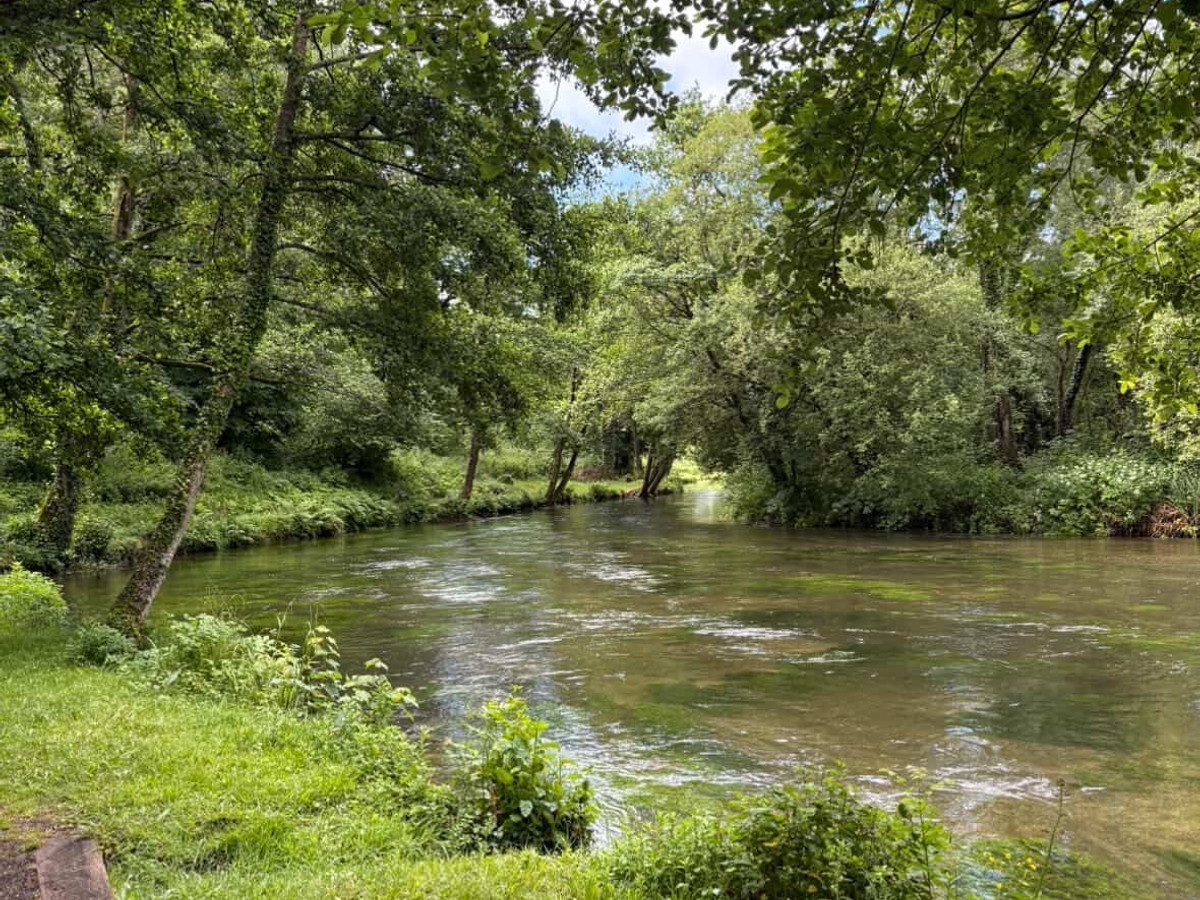
Rising from springs at Donhead St Mary near the Dorset border, the Nadder flows north to Wardour Castle — where it is joined by the River Sem — then carves eastward through the Vale of Wardour past Tisbury, continuing through Barford St Martin and Burcombe to Wilton, where the River Wylye joins from the north near Quidhampton, before passing beneath the Palladian Bridge in the grounds of Wilton House and joining the Hampshire Avon near Salisbury Cathedral. The Nadder is not a true chalk stream in its upper reaches — it rises through greensand close to the Donheads — though from Tisbury downstream it displays the characteristic clear water, bright gravel, and long tresses of ranunculus of a chalk river. The Nadder fishes well from the season opener in mid-April, when the water often carries colour from winter rains but produces strong hatches of large dark olives and grannom — the latter in particular driving trout into a feeding frenzy. The mayfly hatches are notable for their duration: they begin around the same time as the Test but can continue well into June, with sporadic appearances reported as late as September. Through summer, long evenings bring reliable hatches of olives and sedges that keep brown trout rising into darkness. The season targets brown trout primarily, though from 16th June grayling and roach can also be taken on the fly. Some beats permit wading, which allows bankside vegetation to develop and supports a richer fly life. G.E.M. Skues spent some of his last days fishing the Nadder just outside Wilton, writing of the Iron Lattice Bridge where he would study flies caught in the cobwebs between the lattices — a reminder of the river's quiet place in fly fishing history. The Nadder remains one of the best-kept secrets in dry fly circles. One beat is currently available to book on FishingBeats, offering dry fly and nymph fishing for wild brown trout and grayling on this understated Wiltshire chalk stream.

20 miles chalk stream
River Frome
7 beats →
1 fishery

Dorset

River Frome

The major chalk stream of southwest England, the River Frome rises from St John's Well in the village of Evershot and runs for 35 miles through the heart of Dorset. From Evershot it passes through Cattistock, Maiden Newton, and Dorchester before broadening across a wide flood plain and flowing into Poole Harbour at Wareham alongside the parallel River Piddle. The Frome is less affected by abstraction than any other chalk stream, and carries classic chalk stream features — riffles, pools, glides, gravelly bottoms and beds of ranunculus for most of its length. The Frome and its tributaries provide a rich habitat for wild brown trout and grayling. The season opens with a grannom hatch, followed by hawthorn, mayfly and blue-winged olives as the season progresses, with sedges rounding off the year. Mayfly hatches run from mid-May until mid-June, and a particular feature of the river is the quality of the high-summer fishing, with hatches of pale wateries, blue-winged olives and sedges extending well into autumn. The Frome has three times laid claim to the British grayling record, each fish weighing over 4lb, and the trout season runs from 1 April to 15 October, with grayling fishing available from 16 June through to 14 March. The lower river also sees runs of salmon and sea trout, though annual counts of juvenile Atlantic salmon have fallen to their lowest in more than 20 years of monitoring, following the lowest ever number of adults returning from sea to spawn. The river is designated both a Site of Special Scientific Interest and a Special Area of Conservation, and conservation work led in part by founders of the Wild Trout Trust has helped establish healthy, self-sustaining wild trout populations across the Wessex streams. Seven beats are available on the Frome through FishingBeats, covering a range of water from the intimate upper reaches to the broader mid-river stretches around Maiden Newton and Moreton. Following significant investment in fish passage improvements, salmon and sea trout now reach beyond Maiden Newton, and grayling — previously confined below Dorchester — have colonised the upper river and its tributaries.

35 miles chalk stream
River Dever
6 beats →

Hampshire

River Dever

A compact Hampshire chalk stream, the River Dever rises at West Stratton near Micheldever and flows westwards for 11 miles to meet the River Test at Wherwell. Unlike many of the chalk streams of Hampshire, the Dever initially runs west before turning south across Bransbury Common. Narrow and intimate throughout its length, it passes through Barton Stacey and the hamlet of Bransbury before skirting the north of Barton Stacey and meeting the Test on Bransbury Common, opposite the east fields of Wherwell. The stream was a favourite of F. M. Halford, the Victorian dry fly theorist whose work on the nearby Test shaped modern fly fishing as we know it. The Dever offers clear-water sight fishing with both dry fly and nymph. Fish tend to be highly visible, hanging in front of big beds of starwort and lazily tipping up to sip down passing insects. The river has good hatches of the main groups of upwinged flies, and in recent years Grannom have reportedly made a reappearance. The river holds a good head of wild fish, though in places it is stocked with brown trout. Grayling fishing is also well regarded here, with the Dever well suited to day rods and guided trips for those targeting grayling, with a season open from 1st November to 28th February. It is worth noting that the Dever has suffered from a shortage of water due to abstraction, perhaps more so than the other chalk streams — flow levels are worth checking before booking in a dry summer. The lower river flows through Bransbury Common, a Site of Special Scientific Interest comprising the Common itself and disused water meadows. The rich soil of peat over gravel and heavier water meadow soils together support a wide variety of meadow grassland, sedge communities, and chalk stream flora and fauna. Six beats are available on the Dever, with the Newton Stacey Estate offering some of the most notable access — the estate water forms a Y-shape where the Dever and Test meet, with the Dever as the eastern arm.

11 miles chalk stream
Hampshire Avon
5 beats →

Wiltshire

Hampshire Avon

Rising as two arms in the Vale of Pewsey, the Hampshire Avon merges at Upavon and flows south across Salisbury Plain through Durrington, Amesbury and Salisbury before entering the Hampshire Basin and running along the western edge of the New Forest through Fordingbridge and Ringwood, meeting the River Stour at Christchurch and emptying into Christchurch Harbour. The East Avon rises from chalk while the West Avon rises in greensand, meaning the river is not a true chalk stream in the strictest sense — persistent heavy rain early in the season can leave it briefly coloured, though from summer through to the end of the season water clarity is comparable to many chalk streams. One of the most varied rivers of its type in the UK, over 180 species of aquatic plant have been recorded, and it supports one of the most diverse populations of fish, plant and wildlife in England. The trout season opens on 1 April in time for hatches of grannom and large dark olives, running through to 15 October. Mayfly (Greendrake) hatches, once started, can continue for many weeks — though they are generally lighter than on the Test system. From October through to early March, grayling become increasingly dominant and are the primary target through the winter months. The upper river and its chalk-fed tributaries, the Wylye and Nadder, are fished with upstream dry fly and nymph for wild brown trout and grayling. Downstream of Salisbury the river transitions to a largely coarse fishery, and from below Fordingbridge there are a number of salmon fisheries before the river reaches the sea at Christchurch. The Netheravon stretch carries particular angling history: Oliver Kite devised the Kite's Imperial here to represent the large dark olive, while Frank Sawyer served as river keeper for the Services Dry Fly Association and created the Pheasant Tail Nymph on the same water. Thought to contain more species of wild fish than any other river in Britain, including the renowned Avon salmon, the Hampshire Avon is subject to active conservation effort. The Salisbury and District Angling Club participates in Salmon & Trout Conservation's SmartRivers programme, with three river keepers working continuously to improve fish habitat and promote aquatic fly life. FishingBeats currently lists two beats on the river, covering the upper chalk-stream reaches where dry fly and nymph fishing for wild brown trout and grayling is at

60 miles chalk stream
River Allen
4 beats →

Dorset

River Allen

Rising as a winterbourne on the chalk downland of Cranborne Chase near Monkton Up Wimborne, the River Allen flows roughly southwards through Wimborne St Giles, picking up the Gussage Stream at Gussage All Saints and the Crichel Stream south of Moor Crichel, before passing through Witchampton and Hinton Parva on its way to its confluence with the River Stour at Wimborne Minster, 14 miles from its source. Surrounded by private land, it has remained relatively unspoilt and undisturbed — running through the Cranborne Chase Area of Outstanding Natural Beauty. The Allen carries a strong reputation as a chalk stream fishery supporting good stocks of wild brown trout, as well as grayling and indigenous coarse fish. Fly hatches occur consistently through the year, including a strong mayfly appearance in early June, with blue-winged olive and pale watery among the characteristic upwing hatches. The river is narrow and heavily vegetated, demanding a careful approach: fish lie in tricky spots, and stealth is essential to avoid spooking them. Upstream dry fly is the primary method, with nymphing coming into its own through late summer and autumn. The Allen is considered a conservation success story; a group of local anglers, some of whom went on to found the Wild Trout Trust, drove efforts to protect and improve the river, and it now supports a healthy, self-sustaining wild trout population. The river also holds the rare white-clawed crayfish, found in only a handful of other British rivers. Of all the English chalk streams, the Allen is one of the most private, with nearly its entire length under the ownership of just two large estates that have been in the same family for many generations. Deans Court, near the confluence with the Stour, is part of a Landscape Recovery Scheme working to restore the water meadows and improve habitat along the Allen corridor. Four beats are currently available to book on FishingBeats, offering rare access to one of Dorset's most tightly held chalk streams.

14 miles
River Anton
3 beats →

Hampshire

River Anton

Rising at Anton Lakes Nature Reserve in Andover, where the river emerges from the chalk and flows through former watercress beds, the Anton is a compact Hampshire chalk stream of around eight miles. It runs south through a sequence of villages before reaching the River Test at Chilbolton, making it one of the Test's principal upper tributaries. The river features a good variety of wide open shallows, fast weedy sections, and deep holes — intimate water that rewards careful wading and a precise presentation. The Anton shaped the milling history of Andover, with its role in the town first noted in the Domesday Book of 1086, though the fishing beats lie on the quieter, rural stretches downstream. The Anton is known for its prolific fly life and holds some very large wild brown trout and grayling. During spring and summer, trout feed on floating insects that hatch throughout the day, creating reliable opportunities for the dry-fly angler. Iron blue hatches can be particularly impressive on the Anton, and into September, small olives trickle off the surface through the middle of the day, with sedge hatches continuing into the evenings and bringing aggressive surface rises. The main season runs from mid-April to the beginning of October, with upstream dry fly only until 30th June, after which an unweighted upstream nymph may also be used. The river flows crystal clear for almost the whole season, making it a genuine sight-fishery where anglers can target specific fish. Two beats are available to book on FishingBeats, offering access to this lesser-known but characterful Test tributary. A partnership involving Test Valley Borough Council, the Environment Agency, and the Hampshire and Isle of Wight Wildlife Trust has been working to improve the river corridor, with ongoing habitat restoration work focused on the upper reaches through Andover.

8 miles chalk stream
2 beats →

Hampshire

Candover Brook

Rising from springs just south of Preston Candover, the Candover Brook is a 6-mile chalk stream in Hampshire that runs south through the Candover Valley before joining the Alre and Tichborne Brook just below Alresford to form the River Itchen. The brook sits within the Itchen Valley Countryside Heritage Area, reflecting the biological richness of this part of the upper Itchen catchment. It is a narrow, intimate water — fast-flowing with a channel well-suited to in-stream vegetation and brown trout spawning habitat, and one of the few rivers remaining in southern England that is home to the endangered native white-clawed crayfish. As a small upper Itchen tributary, the Candover Brook is almost exclusively wild trout water, with fish that are resident, free-rising, and selective. The Itchen catchment hatches — particularly blue-winged olive and sedge — are prolific, offering reliable dry fly action through the season. Upstream dry fly is the expected method, demanding accurate presentation on a tight, tree-lined stream where stealth matters as much as fly choice. Large woody debris adds habitat complexity, creating diverse flow types and important cover for juvenile trout. The Environment Agency has worked with the Wild Trout Trust and local landowners to restore the brook, narrowing over-wide sections to improve flow and spawning conditions. The Grange Estate is among the landowners involved in ongoing conservation work on the brook. Two beats are currently available to book on FishingBeats, offering rare access to one of Hampshire's most intimate and ecologically significant chalk streams.

6 miles chalk stream
River Dun
2 beats →

Hampshire

River Dun

Rising near the villages of East and West Grimstead in Wiltshire, the River Dun flows east through the county border, passing north of Lockerley and Dunbridge before joining the River Test near Kimbridge — a journey of around eleven miles. The river displays many classic chalk stream features, though much of its catchment drains tertiary clay and alluvial gravel geology, giving it slightly flashier flow characteristics and higher suspended sediment levels than some of its Test tributaries. The upper reaches above West Dean are ephemeral and can dry up completely during drought periods, so the more reliable fishing lies in the middle and lower valley. The Dun is smaller and less prolific than other rivers in Hampshire, but it can also be quieter during busy periods — an advantage for anglers who prefer unhurried water. Brown trout and grayling are the primary quarry. The trout season runs broadly from April to early October, with the hawthorn hatch arriving in late April, the mayfly from mid-May to early June, and a variety of caddis, olives, and terrestrials through summer. Upstream dry fly and nymph are the standard methods on a river this size. The Dun is also home to protected species including the great crested newt, so anglers are expected to take care of the environment and practise responsible fishing. The Mottisfont Abbey Estate holds a stretch of the River Dun immediately above its confluence with the Test, making it one of the most notable access points on the lower river. The Kimbridge Estate also encompasses the River Dun alongside its main Test water, managed as a purist fishery adhering to traditional upstream dry fly fishing for wild and stocked brown trout. FishingBeats currently lists two beats on the Dun — a rare opportunity to fish a quiet, intimate chalk stream in the heart of the Test Valley.

11 miles chalk stream
River Lambourn
2 beats →

Berkshire

River Lambourn

Rising from chalk springs near the village of Lambourn in the Berkshire Downs at around 152 metres above sea level, the Lambourn flows south-easterly through the Kennet Valley for approximately 16 miles before joining the River Kennet at Newbury. Fed entirely by chalk springs, the river maintains gin-clear water and stable year-round temperatures — characteristics that define it as one of England's classic lowland chalk streams. The river passes under the M4 near Welford and through the villages of Great Shefford and Boxford before reaching Newbury. The Lambourn is almost unique among southern chalk streams in that its flow regime remains near-natural, not being significantly modified by groundwater abstraction. The river supports one of the best and most productive wild brown trout fisheries in the area, with natural populations of grayling also present. It ranks in the top 10% for England and Wales for the number of macroinvertebrate families recorded, with five nationally rare invertebrate species associated with the river — a strong indicator of the insect life that sustains its hatches. The trout season opens in April; expect hawthorn early on, followed by a mayfly hatch, then a mix of olives, sedges, and terrestrials through the back half of the season. Grayling fishing continues through winter on the Lambourn. The intimate scale of the river, its ranunculus beds, and clear water demand careful wading, accurate dry fly or nymph presentation, and a measured approach to each fish. The river forms part of the Kennet and Lambourn Floodplain Special Area of Conservation and most of its length is designated as a Site of Special Scientific Interest. Current conservation challenges include North American signal crayfish, land drainage pressures, and barriers to ecological continuity, though fish passage improvements and habitat enhancement works were completed in 2025, funded by the Environment Agency and carried out by ARK and the Wild Trout Trust. Many stretches are held by private syndicates, with limited day-ticket access available. FishingBeats currently lists one beat on the river, offering a rare opportunity to fish this tightly held Berkshire chalk stream.

15 miles chalk stream
1 beat →

Hampshire

River Alre

Rising from chalk springs near Bishop's Sutton, the River Alre runs west for just under four miles through the heart of Hampshire before joining the River Itchen near Itchen Stoke and Ovington. A classic English chalk stream, it carries a shallow gravel bed and fast-flowing water fed year-round by chalk springs. The Alre runs just north of New Alresford, separating it from the smaller village of Old Alresford, passing beneath two historic water mills — Arle Mill and the Fulling Mill — as well as supporting active watercress farms. North-east of Alresford, one channel runs through Old Alresford Pond, an artificial 12th-century stew pond originally dug to provide fish for the Bishop of Winchester, now designated a Site of Special Scientific Interest. Through Bishop's Sutton the river forms a good natural trout fishery, and the water remains clear enough that fish can appear to be swimming in air. The limpid water means resident wild brown trout and grayling are quick to spot an approaching angler — careful wading and precise presentation are essential. Dry fly is the primary method, with hawthorn fly and grannom among the hatches that kick the season off, followed by mayfly from mid-May to early June, and a variety of caddis, olives, and terrestrials through summer. The season runs broadly from April through to early October for trout, with grayling fishing extending later into the year. Western Court is, as far as is known, the only beat available to day rods on the River Alre, making access to this water genuinely rare. The Itchen is formed by the Alre, Tichborne, and Candover Brook coming together just below Alresford, so fishing the Alre puts an angler at the very headwaters of one of Hampshire's most celebrated chalk stream systems — a short river, but one with considerable history and character behind it.

4 miles chalk stream
River Dove
1 beat →

Derbyshire

River Dove

The River Dove is the principal river of the southwestern Peak District, rising on Axe Edge Moor near Buxton and flowing roughly 45 miles south to its confluence with the River Trent at Newton Solney. For almost its entire course it forms the boundary between Staffordshire and Derbyshire, meandering past Longnor and Hartington before cutting through a series of deep limestone gorges — Beresford Dale, Wolfscote Dale, Milldale and Dovedale. The river is fed by winter rains percolating through limestone bedrock, producing water whose temperature and clarity are well suited to brown trout and grayling. Approximately 10.5 kilometres of the river, including the Dovedale section, is designated as a Site of Special Scientific Interest for its limestone river habitats, supporting brown trout, grayling, and invertebrates adapted to gravelly riffles and weed beds. The river carries healthy hatches throughout the season — blue-winged olives, hawthorn flies, sedges and iron blues are reliable staples — and the mayfly fishing in May and June, when fish feed hard for two weeks or more, produces some of the most active sport of the year. Later in the season, smaller patterns such as the black gnat, fished on a fine leader, can draw the larger fish. Dry fly and upstream nymph are the standard methods; most beats require some wading, though bank fishing is possible on many stretches. Agricultural run-off has historically been the main pressure on water quality, though this is being addressed and the river has shown steady improvement over recent years. Following a programme of salmon reintroduction, facilitated by weir removals, the Dove is slowly recovering its potential as a habitat for migratory species. The Dove holds a singular place in angling history: Charles Cotton, who fished this water from Beresford Hall near Hartington, co-authored the fly-fishing chapters of Izaak Walton's *The Compleat Angler*, and his section on fishing the Dove remains one of the earliest and most influential treatises on the sport. Cotton built his fishing house in 1674 — known to anglers as "The Temple" — with the inscription *Piscatoribus Sacrum* carved above the door, and it still stands in Beresford Dale today. Several fisheries operate on the river, most requiring membership of the Derbyshire River Anglers' Conservancy (DRAC), with additional day-ticket and syndicate beats available along the lower reaches near El

45 miles chalk stream
River Meon
1 beat →

Hampshire

River Meon

The most easterly of the Hampshire chalk streams, the River Meon rises from groundwater springs south of East Meon in the South Downs and runs 21 miles southward through Hampshire to meet the Solent at Hill Head near Titchfield. From its source it loops north through West Meon, then swings southwest through Warnford before settling into a southerly course through Exton, Corhampton, Meonstoke, Droxford, Wickham, and Titchfield. In many respects it is a smaller version of the Itchen — just as clear, but perhaps a little faster flowing. The river falls approximately 120 metres from source to sea, and because the middle and upper reaches flow over Lower Chalk — less permeable than the Upper Chalk geology found elsewhere in East Hampshire — the Meon tends to have a greater flow range compared to other southern chalk streams. Environment Agency fishery surveys have concluded that the river is "a productive brown trout river." The Meon is also noted for a strong run of sea trout, although they are rarely targeted by anglers on this system. The river supports an abundance of riverflies of interest to dry fly anglers, including olives, blue-winged olives, stonefly, and caddisfly, with excellent hatches of mayfly providing the most anticipated sport of the season. Within a typical half-mile section there will be gravel shallows, deep pools, open meadows, and woodland — varied water that rewards both upstream dry fly and careful nymphing. Some beats are dry fly only, but virtually all permit a single fly cast upstream. Grayling are present through the middle and lower reaches and provide good sport on selected beats right through until 31st January. Anglers should be aware that as of 2025, the river's flows do not support good ecological status, with the water industry identified as the main reason for failure, and 100% of the river is currently rated at moderate ecological status. The Portsmouth Services Fly Fishing Association leases around six miles of fishing between Exton and Fontley, covering much of the productive middle river. Day-ticket beats are available at Exton and at Midlington near Droxford, where the Wild Trout Trust has carried out habitat restoration work to improve spawning riffles and holding pools. Meon Springs, further downstream, offers regularly stocked fishing for both brown and rainbow trout and suits anglers looking for a more managed introduction to the river.

21 miles chalk stream
River Wye (Buckinghamshire)
1 beat →

Buckinghamshire

River Wye (Buckinghamshire)

One of six chalk streams in Buckinghamshire, the River Wye rises from springs in the Chiltern Hills within a small copse in the fields alongside Chorley Road to the north-west of West Wycombe and flows for about 10.5 miles through High Wycombe, Loudwater and Wooburn Green to its confluence with the River Thames at Bourne End. Being relatively close to the source ensures the water is exceptionally clear, even by chalk stream standards. The valley carries a remarkable industrial past: the Domesday Book records eighteen mills in the nine miles between West Wycombe and the Thames, and by 1816 there were 32 paper mills along the river, some of which also milled corn. In 1965, a stretch of the Wye was buried under the streets of High Wycombe to widen a road, and much of the town-centre section remains culverted today. The trout season runs from 1 April to 30 September. Fish take nymphs, buzzers, spiders and damselflies well; dry fly can work on parts of the river, but the current is generally too slow for traditional presentation, and there is no mayfly hatch. The water holds abundant snail and freshwater shrimp, and brown trout average around 2 lb, with fish recorded to 7 lb. Fishing is fly only, mostly from the bank with no need to wade. The river demands stealth: the water is gin clear, allowing anglers to spot and stalk individual fish and watch them take the fly — though they spook easily. The most significant fishery sits within West Wycombe Park, where the river was incorporated into the 18th-century landscaping of the estate; the house and grounds are owned by the National Trust. All fish on the estate water are returned under a total catch-and-release policy. Away from the upper beats, the Revive the Wye project — run by a steering group including the Chilterns Chalk Streams Project and the Environment Agency — is actively working to restore the river's ecology, having moved approximately 40 tonnes of gravel by hand to improve invertebrate populations and spawning habitat for brown trout. Access to bookable beats is limited, making the Wye a genuinely intimate small-stream destination within easy reach of London.

9 miles chalk stream

Devon

River Taw

45 miles spate

Derbyshire

River Wye (Derbyshire)

A limestone river rising on Axe Edge Moor near Buxton, the Derbyshire Wye flows southeast for 22 miles through the Peak District National Park before passing through limestone gorges including Ashwood Dale, Chee Dale, and Miller's Dale, and through villages such as Ashford-in-the-Water and Bakewell, where it meets the River Derwent at Rowsley. The high alkalinity of the water provides a nutrient-rich habitat for insects and invertebrates, and in turn the wild brown trout, rainbow trout, and grayling that thrive here. The river enjoys hatches of upwinged flies, including the iconic mayfly, caddis flies, and stoneflies, together with an abundant population of freshwater shrimp. Spring days bring hatches of olives and grannom, with the mayfly running from mid-May through to the first few weeks of June. Dry fly is the method of choice on most beats — the Wye has been a dry-fly-only fishery since 1865, when James Ogden first demonstrated the upstream dry fly here — though nymph fishing is permitted on some stretches, particularly for grayling in the lower beats. The river's most singular draw is its wild rainbow trout: in the 1890s, eyed ova imported from California were hatched into Ashford Lake near Bakewell; a flood broke the dam and the fish escaped into the Wye, where the river's character proved close enough to their native habitat that they became self-sustaining spawners. Rainbows now make up around 25% of fish caught on the Wye, co-existing alongside the indigenous wild brown trout population. Access is divided between several well-managed fisheries. The Haddon Estate controls a 7.5-mile stretch of the Wye, offering guided days and maintaining a strict no-stocking policy. Cressbrook and Litton Flyfishers' Club manages eleven miles of river from Blackwell, just below Buxton, down to Ashford-in-the-Water, with day tickets available. Post-2010 conservation work at Litton Mill has involved weir and leat modifications advised by the Wild Trout Trust to improve upstream fish passage, and the upper river is currently classified as having good ecological status under Environment Agency Water Framework Directive assessments.

22 miles chalk stream

Wiltshire

River Wylye

A chalk stream tributary of the Hampshire Avon, the River Wylye rises at White Sheet Bottom near the Deverills in south-west Wiltshire and runs for around 27 miles — north through the Deverill villages towards Warminster, then south-east through Wylye and Steeple Langford, before meeting the River Nadder on the northern edge of Wilton. The Wylye flows through chalk and over green sand, and its largely agricultural valley keeps it intimate and largely undisturbed. The river has wonderful twists and turns, deep pools leading into swift gravel runs, and with each step the character changes. The Wylye is known for the quality of its fly hatches and the prolific natural spawning of wild brown trout, as well as its grayling stocks. Stocking is virtually non-existent along most of the river, which allows wild trout and grayling to thrive. Early season brings hatches of large dark olives, grannom and small olives, while the mayfly hatch runs steadily from mid-May to mid-June, sheltered banks helping it continue even in unsettled weather. Dry fly and upstream nymph are the standard methods; beats that permit wading allow anglers to cast carefully to rising fish while bankside vegetation grows up to support fly life and a healthy ecosystem. The trout season runs from 1 April to 15 October, with grayling fishing available from then until 14 March. The Wylye Chalk Stream Project — the first landscape-scale collaboration of its kind on a Wiltshire chalk stream — is led by Wiltshire Wildlife Trust in partnership with the Wylye Valley Farmers group and Wessex Rivers Trust, with funding secured through the Government's Landscape Recovery scheme. The Wylye Fly Fishing Club holds twelve beats near Salisbury on the Wylye and Nadder, ranging from small and intimate to more open water. The Wilton Fly Fishing Club holds just over seven miles of the Wylye. For day-ticket access, the Langford Lakes beat at Steeple Langford is exclusive to Aardvark McLeod and runs through the Wiltshire Wildlife Trust's Langford Lakes Nature Reserve, where strong populations of wild brown trout and grayling are supported by careful habitat management.

27 miles chalk stream

Hampshire

Wallop Brook

Rising near Over Wallop — a name rooted in the Old English for "valley of springing water" — the Wallop Brook runs south through the three villages of Over Wallop, Middle Wallop and Nether Wallop before joining the River Test just upstream from Bossington Manor House. Among the five Test tributaries generally considered fishable, the Wallop Brook is probably the smallest and shortest, covering around eight miles of Hampshire chalk country. The water meanders through traditional ridge and furrow water meadows in a mixture of fast riffles and deep sweeping pools. The brook is full of fin-perfect wild trout and suits the more experienced fly fisher who wants to target wild browns in their natural environment. Olive hatches occur most days, and the fish are always looking up but sit deep and take the dry fly very quickly — be prepared to miss a few. The Wallop Brook fishes like any true chalk stream, rewarding patience and stealth, and has a loyal following of anglers who prefer it to the more manicured beats of the main River Test. The brook fishes well in early season, with the season running from April through to August, subject to water levels. Bossington Estate's fishery includes two miles of the Wallop Brook, which is entirely unstocked. The beat offers over two miles of stream for one or two rods, with all fish caught and released, and wading required. Nether Wallop Mill has hosted a fishing school for over 50 years, and a section of the brook there provides access to canny wild brown trout for anglers developing more advanced techniques.

8 miles chalk stream