Near the village of Lambourn in the Berkshire Downs to Confluence with the River Kennet in Newbury, Berkshire · 15 miles
Fly Fishing on the River Lambourn
5 beats on the River Lambourn sell access by the day, from £63. 1 fishery take bookings along it.
Where the River Lambourn runs
The river's course with every beat and fishery we list on it. Tap a marker for a quick read on price.
Fishing Beats on the River Lambourn
5 beats availableBrowse day tickets, syndicate rods, and permit fishing on the River Lambourn. Each beat listing includes pricing, species, and booking details.
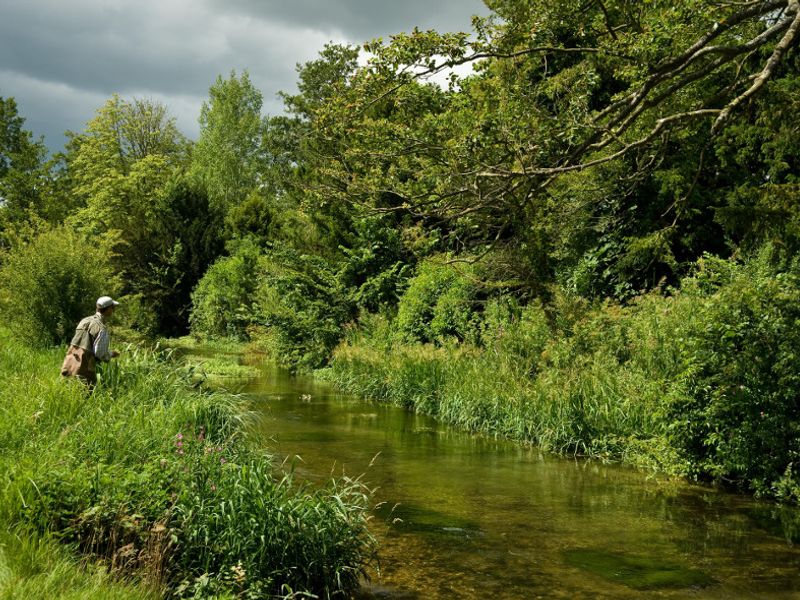
Donnington Grove
Donnington Grove offers just under two-thirds of a mile of single-bank chalk stream fishing on the River Lambourn, near the village of Donnington in Berkshire. The Lambourn is a classic chalk stream — small and fast-flowing, and this beat reflects that character: powered entirely from chalk springs, which produces exceptionally clear water and year-round stable temperatures. The river's flow regime remains near-natural in form, not being significantly modified by groundwater abstraction — a rarity among southern chalk streams that keeps the water quality and aquatic life in excellent condition. The Lambourn sits in the top 10% for England and Wales for the number of macroinvertebrate families recorded, which underpins the quality of hatches throughout the season. The river supports one of the best and most productive fisheries for brown trout in the area, with natural populations of grayling also present. Stocking is light, so the fish are predominantly wild and accordingly wary — this beat is rated legend difficulty, and while the nutrient-rich water allows trout and grayling to grow to large sizes, the clarity makes them hard to tempt. Dry fly and nymph are the only permitted methods. The hawthorn hatch happens around the end of April, with the mayfly running from mid-May to the end of the second week in June — reflected in the dedicated Mayfly Season day rod at £124. In the second half of the season, small flies delicately fished are the key. Grayling fishing extends the season well into winter at £63 per rod. Wading is permitted, which is often essential on this intimate stream. A fishing hut and toilets are on site.

Bagnor Fishery
Bagnor Fishery sits on the River Lambourn near the village of Bagnor, just north of Newbury in west Berkshire. The fishery comprises just over 3,000 metres of double-bank fishing on a classic chalk stream — small and fast-flowing, typical of an upstream English waterway. The river is powered entirely from chalk springs, producing exceptionally clear water and year-round stable temperatures. The estate stretch is split into beats and offers a rural, narrow chalk stream setting well suited to fly fishing. The Lambourn supports one of the most productive fisheries for wild brown trout in the area, with natural populations of grayling also present. The river ranks in the top 10% for England and Wales for the number of macroinvertebrate families recorded — a strong foundation for consistent hatches throughout the season. Expect hawthorn early on, followed by a mayfly hatch, then a mixture of olives, sedges and terrestrials later in the year. Fishing is by upstream dry fly and Skues-style nymph only; no weighted nymphs of any type are permitted. The clear water and sight-fishing nature of the beat make it accessible to beginners while still demanding careful presentation. The fishery is open from 1 April to 1 November. The fishery is open six days a week — closed on Wednesdays for maintenance — and limited wading is permitted within four feet of the bank. On-site amenities include a heated fishing hut with facilities to make drinks, a dedicated car park, and toilet facilities. Newbury station offers a 40-minute rail link to London Paddington, making this a practical day-trip option for anglers travelling from the capital.
Weston Farm Middle Beat
Weston Farm Middle Beat covers a little over a third of a mile of the in , running from the footbridge at the top of the lower beat up to Elton Lane. The downstream end has good gradient and clean gravel, and two hatch pools are the set pieces of the beat. The first, the mill hatch pool, holds adult trout well, with overhead cover from the trees around it, and a fish pass lets fish move up and down past the mill structure. Above the mill the river slows and backs up, impounded by the structure itself. A line of woody flow deflectors, installed under an old Environment Agency habitat project, still earns its keep, breaking up the flow and adding variation in depth. Further up, the Elton Lane hatch pool is bigger again, with a riffle at its tail that offers good spawning habitat. The old fishing hut sits on the bank beside it. Bank management tells its own story on this beat. The fishery’s own bank is left with a thick fringe, giving cover and holding the soil together. Across the river, where a neighbouring garden runs down to the water, the bank is mown lawn over hard revetment. The contrast between the two banks is worth a look on the way past.
Weston Farm Lower Beat
Weston Farm Lower Beat runs about a quarter of a mile of the in , from the footbridge marking the boundary with Welford Park up to the footbridge below the mill. It’s the most mixed of the three beats on the fishery, and the character changes more than once along its length. The downstream end is slow and uniform, impounded water, most likely the effect of the weir and cascade just below at Welford Park. A weed rack across the channel pinches the flow, and the increased pace keeps the gravel underneath it clean. Below the Newbury Road bridge the impoundment eases off and gives way to proper riffle, with redds cut into it. Above the bridge, the left bank is deliberately left uncut: it holds habitat for the Desmoulin’s whorl snail, a rare and protected species. Higher up, the beat passes a perched mill leat with a sluice, then a stretch that was dredged in the past and is now over-wide, over-deep and canal-like. It’s the weakest water on the beat, more a corridor than good trout habitat, and restoring it properly is a long-term aim for the fishery rather than something already done. The beat finishes well: the final run past Marsh Cottage up to the footbridge has a clean gravel bed under healthy growth of crowfoot, starwort and water parsnip.
Weston Farm Upper Beat
Weston Farm Upper Beat is a little under half a mile of the in , running from Elton Lane up to the fishery’s boundary near East Shefford. It’s the best of the three beats, and the one furthest along the road the whole fishery is travelling: it has never been stocked, and is fished as a wild water. An unmanaged meadow buffers the bank for most of its length, and the light touch shows in the river itself: good gradient, plenty of variation in channel form and depth, loose clean gravel, and strong growth of crowfoot, starwort and water parsnip. It’s the kind of water that rewards a quiet, patient approach over a big fly box. A wild, unstocked beat like this needs rest between rods to keep fishing well, so treat that as part of what the day offers rather than a complaint: expect it to fish best when it has been left alone for a while, and to be hard work the day after a good angler has already worked through it.
Fisheries on the River Lambourn
1 fishery availableFishery operators offering bookable fishing on the River Lambourn. Each listing covers tickets, accommodation, tuition, and equipment hire where available.
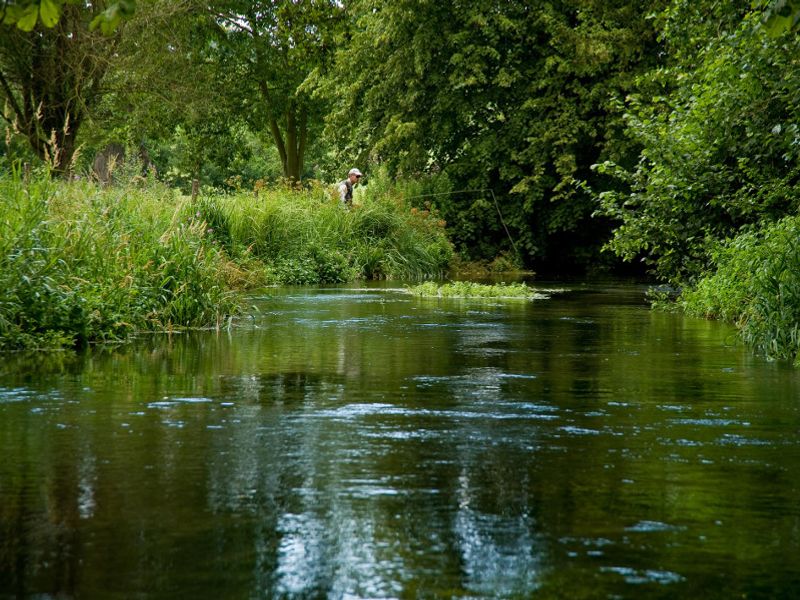
About the River Lambourn
River Lambourn at a glance
- Length
- 15 miles
- Source
- Near the village of Lambourn in the Berkshire Downs
- Mouth
- Confluence with the River Kennet in Newbury, Berkshire
- Tributary of
- River Kennet
- Country
- United Kingdom
- Water type
- chalk stream
- Website
- Visit website
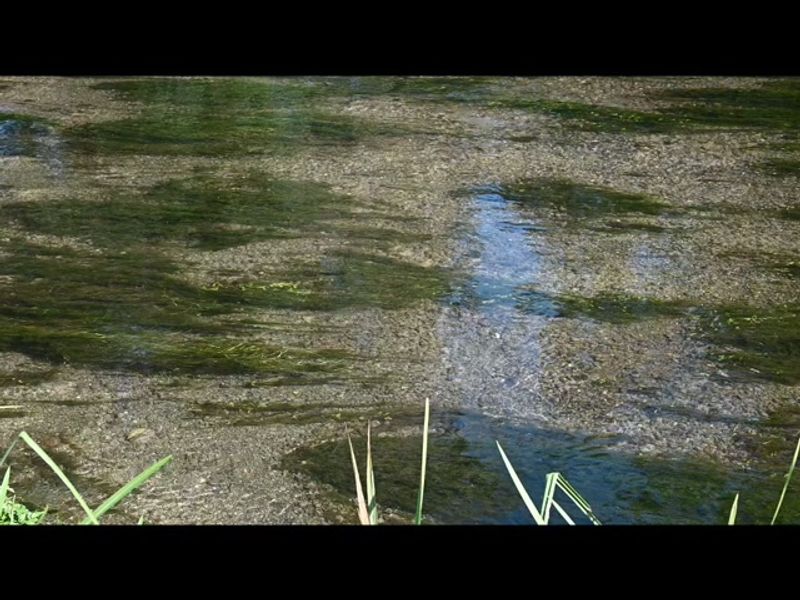
A Berkshire chalk stream of around 15 miles, the River Lambourn rises in the Berkshire Downs near its namesake village of Lambourn and flows as a tributary of the River Kennet. Powered entirely from chalk springs, the river produces gin-clear water and year-round stable temperatures. Its flow regime remains near-natural in form, not being significantly modified by groundwater abstraction, which is notable given that the upper reaches are seasonal, with a perennial source derived from springs located upstream of Great Shefford. The river passes through the villages of Eastbury, East Garston, Great Shefford, Welford, Boxford, Bagnor and Donnington before meeting the Kennet at Newbury.
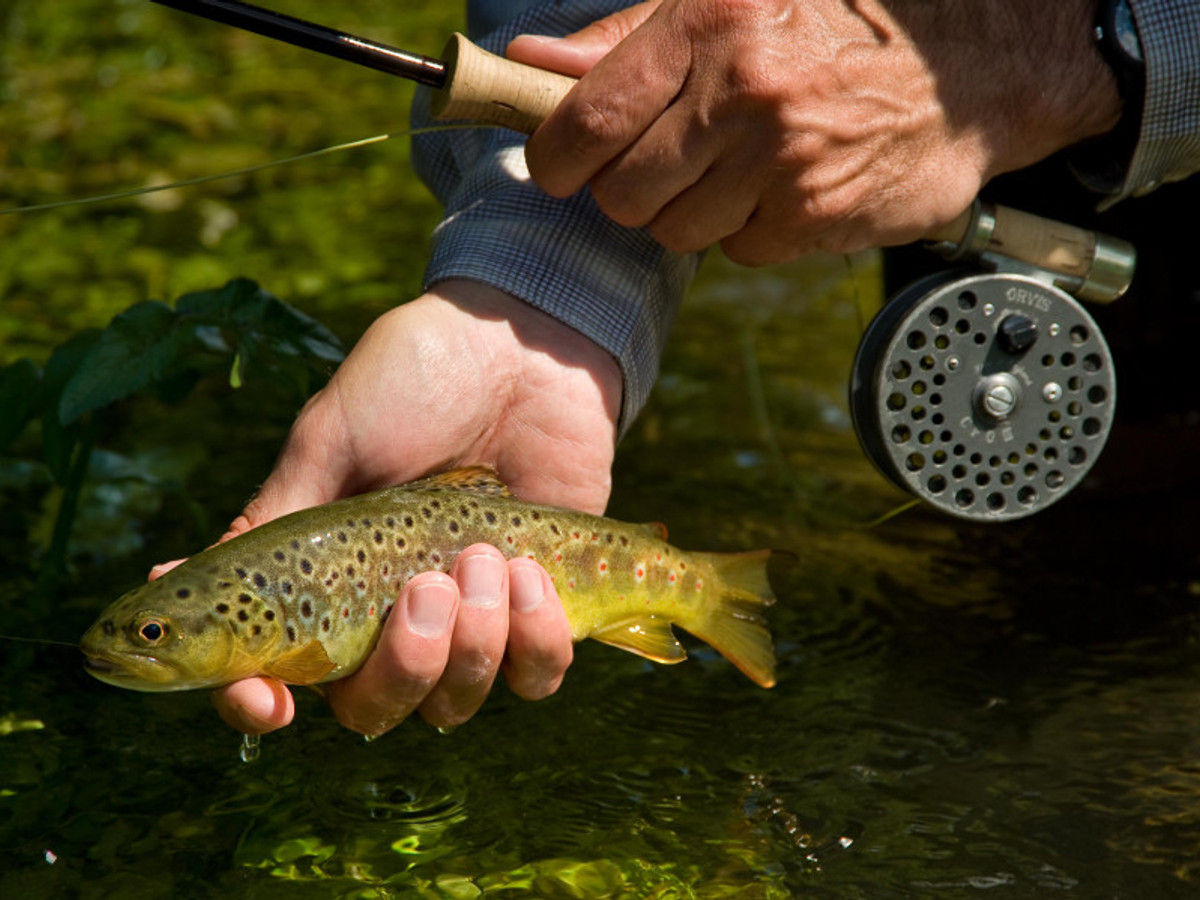
The river supports one of the best and most productive fisheries for wild brown trout in the area, with natural populations of grayling also present. The Lambourn sits in the top 10% for England and Wales for the number of macroinvertebrate families recorded, with five nationally rare invertebrate species associated with the river, a measure of the insect life that sustains its hatches. The season opens in April; expect hawthorn early on, followed by a mayfly hatch and then a mixture of olives, sedges and terrestrials later in the year. Grayling fishing extends the season through winter. Small and fast-flowing, the river is a classic chalk stream where clear water and ranunculus beds demand accurate dry fly or nymph presentation and a careful approach to each fish.
The River Lambourn is designated as both a Site of Special Scientific Interest and a Special Area of Conservation. The river receives road runoff from the M4, and sediment sampling in 2015 showed the presence of heavy metals and other toxins, with turbidity downstream of the M4 discharge recorded at 200 times greater than upstream during rain events. Ongoing work by Action for the River Kennet and partners continues to address fish passage and habitat quality. Many stretches are held by private syndicates, with only a few open to the public. FishingBeats currently lists 5 beat on the River Lambourn, offering rare day-ticket access to this tightly held Berkshire chalk stream. Day tickets start at £93.
FAQ
River Lambourn FAQs
Common questions about fishing the River Lambourn, from day tickets and seasons to what to expect on the bank.
01Can I fish the River Lambourn?
02How much does it cost to fish the River Lambourn?
03When is the fishing season on the River Lambourn?
04What fish can I catch in the River Lambourn?
05Do I need a licence to fish the River Lambourn?
Articles about the River Lambourn
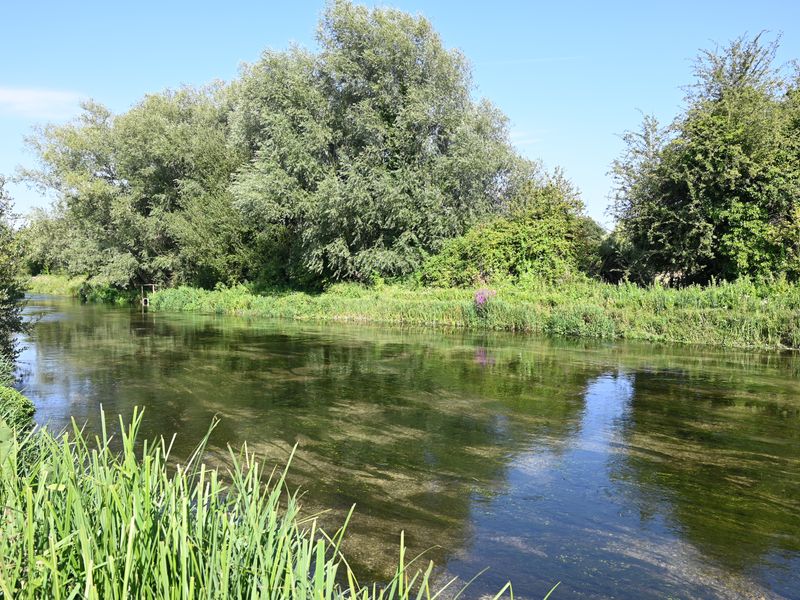
Chalkstreams
Why Chalk Streams Are Clear, Cold and Full of Fish
Why chalk streams run clear, hold their temperature all year and fish the way they do, from the aquifer up. England holds 85% of the world's chalk streams.
Guides
What a £100 chalk stream day actually gets you
A cheaper chalk stream day is not a worse river. It is a less famous one, often less heavily stocked, and that is mostly the whole difference.
Guides
Where to find affordable chalk stream fishing
A mayfly day on the middle Test earns its price. But the same clear water, the same insects, and the same quality of fish are available for well under £100 on the smaller rivers, at the season edges.