Wiltshire
Salisbury & District Angling Club
Membership £29–£360/yr + £50 joining fee. It holds 20 miles of water across 21 stretches.
About Salisbury & District Angling Club
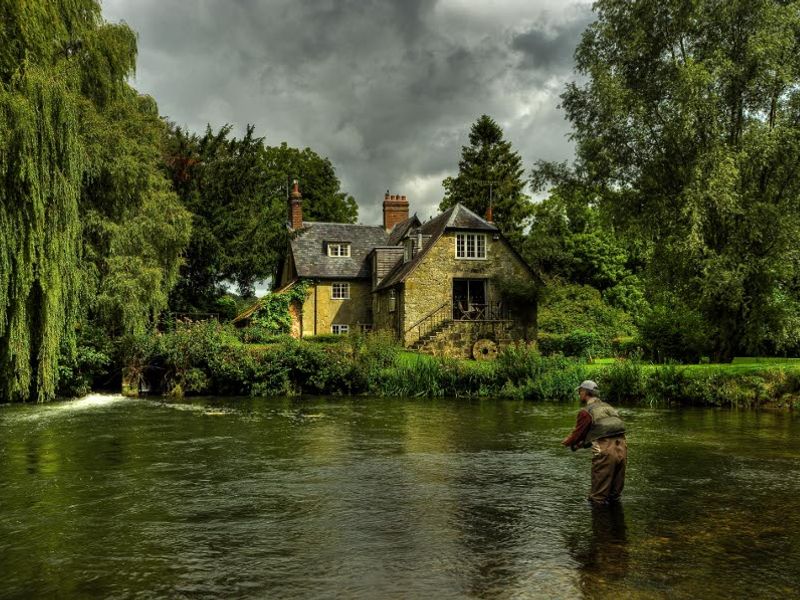
Salisbury and District Angling Club holds one of the largest blocks of chalk stream fishing in private hands anywhere in England, and almost all of it is fished by members rather than sold by the day. The club controls water on five rivers that meet at Salisbury: the Hampshire Avon from Durrington down through Amesbury and the Woodford valley, the Wylye from Warminster to Stapleford, the Nadder at Barford St Martin and Wilton, the Ebble in the Chalke valley, and the Wiltshire Bourne at Gomeldon, Hurdcott and Laverstock. The game fisheries are fly only, upstream dry fly early in the season with nymph added from 1 July, and most run a tally or disc board so you have your beat to yourself.
The character changes a good deal from valley to valley. Durnford, on the Little Durnford Estate, is the club’s showpiece: twenty two beats of stocked and wild water with hatch pools, gravel flats and carriers. West Amesbury is two miles of largely wild river where habitat work with the Wild Trout Trust has let the club cut back stocking almost entirely. The Ebble and the upper Bourne are small, clear and difficult, the sort of water where you spend longer looking than casting. Sutton Veny and Eastleigh on the upper Wylye are wild fisheries of three rods a beat, managed for natural character rather than numbers.
Game membership is £360 a year for full and associate members, £330 for senior citizens and £57 for juniors, and is subject to a waiting list. Coarse and mixed fishery membership is £165, £112 and £29 on the same bands and can be bought at any time. Members can buy guest day tickets at £40 adult and £10 junior for West Amesbury, Queensberry Bridge and Abbey water on weekdays outside the mayfly period, and any day from 16 October to 31 December for grayling. Day tickets to non-members are sold on some of the coarse fisheries through local tackle shops. The club is based at The Cart Shed, New Bottom Road, Stratford sub Castle, Salisbury SP4 6AB.
How fishing here works
Membership is capped. New members join a queue, which can run to several years depending on the club.
Anyone can join. There is no waiting list, and membership is usually bought straight from the club.
Non-members can buy a ticket for a single day, sold alongside membership.
A member can bring a guest fishing, usually capped at a set number of days a season.
Membership and waiting list
Membership
Membership £29–£360/yr + £50 joining fee
20 miles of water controlled
Waiting list
Game membership runs a waiting list. Local members living within 14 miles of the centre of Salisbury are invited as soon as a vacancy comes up, currently around a year. Associate members living further out wait 2 to 3 years. Registering on the list costs a non-refundable £50, and a further £50 joining fee applies to applicants who registered after 20 January 2026. Junior game membership, ages 12 to 17, is not subject to the waiting list. Coarse and mixed fishery membership can be bought at any time with no wait.
Water Salisbury & District Angling Club controls
21 stretches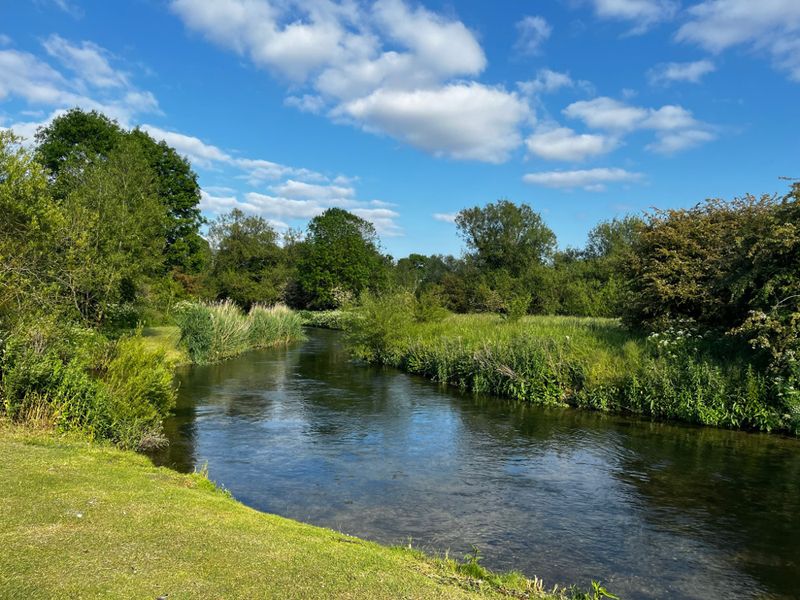
Hampshire Avon
Queensberry Bridge Fishery
A short walk from the middle of Amesbury, where the road bridge crosses the Avon. Stop on the bridge on the way in and you will usually see trout and grayling holding in the currents below, which is a good or a bad way to start depending on how the day goes. Below the bridge the meadow opens out into rapid sections of varying depth, shallows of popply water and deeper glides with fronds of weed waving in them. Early season means hawthorn fly, which comes in fits and starts through late April and early May and needs a bit of wind to blow the insects onto the water. Then the mayfly, usually starting in the afternoons. Grayling can be fished for from 16 June on the dry and from 1 July on the nymph, and sedge and the odd late hawthorn keep the dry fly worth carrying through the summer as levels drop. There is winter nymphing for grayling too. A light rod of eight to nine feet and a fine tippet suit the water. Small sedge patterns and nymphs in sizes 16 to 18 cover most of it, with mayfly, hawthorn and daddies in the box for their weeks. Casting is easy in places and awkward in others where branches hang over the better pools. Wading is permitted but take care of scoops, holes and clinging weed. The trout are wild and there are some better fish in there than the average suggests.
Hampshire Avon
Abbey Fishery
Around 450 yards of double bank Avon on the edge of Amesbury, upstream of Tumbling Bay and a short distance from Queensberry Bridge, sitting immediately above the West Amesbury water. The true right bank is the more open of the two and the easier to fly fish; the left is tighter. It is a small fishery by the club’s standards and works well as a short evening visit, being close to the town and quick to walk. Parking is either just inside the Abbey grounds or at the recreation ground, and members are asked to sign both in and out and fill in the returns book kept at the Abbey parking spot. Trout and grayling are both present and the water is the same quality as the rest of the Amesbury stretches. Guest day tickets for this water can be bought by members.
Hampshire Avon
Ratfyn Fishery
The true left bank of the Avon north of Amesbury, reached along a private farm road running parallel to the A303. Park opposite the equestrian stables and walk in; the signing in book is clearly visible when you reach the river. There is no beat system, so you choose to fish left or right of the book. Downstream of the book there is mown access with fringe cover to the water’s edge, and you may fish as far as the road bridge, which is the end of the fishery. Upstream, the reeds and bank growth make it harder going, though there are still stretches you can get a line onto. Parts of the river here cannot be fished from this bank at all because of the vegetation, and those are better covered from the Countess fishery on the opposite side. It is honest about being a difficult fishery rather than a comfortable one, and quiet for it. Worth knowing before you set out: the security barrier at the entrance to the lane closes half an hour before sunset.

River Bourne
Upper Bourne Fishery
A premium wild fishery on the upper reaches of the Wiltshire Bourne, holding trout and large grayling. Fishing is from the bank, around 500 yards of main river along with some side streams. It is challenging water and asks for an extremely stealthy and delicate approach. The fun of it is stalking good fish in crystal clear water, with catching them as a bonus rather than the point. Small nymphs are the most successful, though small dry flies are worth a go too, particularly on the faster stretches. This is the hardest of the club’s three Bourne fisheries and the one that most repays going slowly.
Hampshire Avon
Stonehenge Fishery
Six hundred metres of wild, unstocked Avon with a car park right on the river, which is rarer than it sounds on this valley. Four members may fish it at a time. The bottom 200 metres is bank fishing; above that you can wade, and under normal conditions the water runs from knee to waist deep. It is close to Durrington but does not feel it. The setting is rural and quiet, and it is one of very few club fisheries where a non-fishing guest is welcome, so it works for a day when someone is coming along to walk rather than cast. There is a good head of trout and grayling. In 2014 over 600 fish were recorded from only 287 visits, which gives a fair idea of the stock density for a river with no stocking at all. Riverfly monitoring is carried out here and olives, mayflies and cased caddis are all abundant. The Durrington fishery is less than half a mile away.
Hampshire Avon
Durrington Fishery
Three hundred metres of the upper Avon on the edge of Durrington, south of the River Park recreation ground. The paths are kept by a local residents group and most of the fishery has no trees or shrubs behind you, so casting is straightforward. It is worth watching for walkers before you start a back cast. The wading section at the bottom of the beat grows a good bed of ranunculus every year and varies from mid-calf to waist deep. The fishery sits immediately below a private trout fishery that restocks regularly, and there is a good head of trout and grayling as a result. One thing to plan around: during school holidays, after school, at weekends and in hot weather the area is well used by local children, who are allowed to fish by any means between the white markers. Outside those times it is generally very quiet and visited by the occasional dog walker. Early and late season are the pick of it.
Hampshire Avon
Lower Woodford Fishery
Five beats on the true right bank of the Avon upstream of Little Durnford, marked A through to E, with a disc board in operation and one person per beat. The casting is unrestricted, which on the Woodford valley means classic open chalk river with the water in front of you and nothing behind. It is a members only fishery with no day tickets and no guests, fishing or non-fishing, which keeps it as quiet as any water the club holds. Fishing is dawn to dusk and wading is allowed where indicated. The season runs 1 April to 30 June on upstream dry fly only, then upstream dry fly and nymph from 1 July to 15 October. Grayling are fished on the same methods but only from 16 June.
River Wylye
The Wylye Fishery
Half a mile of the Wylye at Wylye village, twelve miles west of Salisbury on the A36 Warminster road. The fishery is the true left bank and takes up to four rods, controlled by a tally board and return book at the entrance, so you always know how many people are on the water before you walk in. Upstream nymph and dry fly only, for trout and grayling. There is no wading and no dogs. It is a straightforward fishery to fish and an easy one to get to, sitting right on the main road west out of Salisbury, which makes it a sensible choice for a short visit. Full location details for each of the club’s fisheries are in the members’ year book or on Clubmate.
River Wylye
Stapleford & Druid Fishery
Two popular Wylye beats six miles west of Salisbury on the A36, reached by parking at The Pelican Inn and walking down past the River Till into the meadows. It is an attractive and undisturbed site, and the landlord welcomes members’ custom on the way back. Druids is the true right bank, running up and downstream of an old hatch pool. The top end is lightly wooded with fast water and some very good grayling. Stapleford, on the left bank, includes a short length of the Till and runs downstream through the hatch pool before opening out onto a big pool on the corner. There is room for several rods and they are free to share the whole water rather than being tied to a beat. Some good trout have been taken here and grayling are present throughout. The water is usually very clear so concealment matters. No wading is allowed, though you may step down the bank onto dry ground where it helps. It is currently a stocked fishery, though the club has said it hopes to join other clubs in eventually making the whole of the Wylye wild fish only.
River Nadder
Barford St Martin Fishery
A three rod stretch of the Nadder running upstream on the true right bank from the bridge over the A30 at Barford St Martin, just west of Wilton. Park at the local pub and walk down. It is a premium wild fishery with good numbers of trout and grayling, and dace and chub are taken on the fly too. A few fish of around a pound and a half come out each year but most are a pound or less. The beat alternates deep slow bends with shallow gravelly runs. The deep water holds the better fish and is best approached in the late evening and through the summer. Early in the season most fish are in the weed in the shallower areas. Large dark olives hatch in the middle of the day early on, there is a good grannom hatch on warm April days, a healthy mayfly population, and yellow may duns appear in numbers. Summer evenings give the best of it, and the last hour before dark is almost always the best of those. The top third allows wading, where the banks are steep and lined with trees; take care of one or two deep spots and the undercut roots sticking out from the bank. The rest is open meadow on the edge of the village with easy casting and level banks, which makes it a safe fishery for older members. Bigger stocked fish occasionally drop in from fisheries further up the river.
River Nadder
Nadder Meadows, Wilton
A double bank fishery above Wilton on the Nadder, taking eight rods, four on each bank. The north bank is entered by the lane next to the cemetery on the A30 Shaftesbury Road out of Wilton. It is the shorter of the two but the casting is easier, being open meadow. The south bank is reached from South Street, Wilton, with easy parking at the Michael Herbert Hall, or from a small club car park on Burcombe Lane. The return books and disc board are inside the field gate a little further up the road. Either route means a walk through the meadows, where on quiet evenings red kite, buzzard, green woodpecker, barn owl and deer have all been seen. Early and late in the season the meadows can be quite wet. Waders help you reach the wilder spots, though there is plenty of fishing from the bank. The water varies between gravelly runs and deeper areas, and there is an attractive hatch pool at the top of the beat that has produced some of the larger fish. There is a good stock of wild trout and grayling along with some coarse fish, and catch and release is advised.
River Ebble
Longbridge Fishery
A two rod stretch of the Ebble just east of Broad Chalke, in one of south Wiltshire’s quieter valleys. Park at the roadside close to the bridge at the bottom of the beat and you will find the return books and disc board just inside the field gate. The Ebble is one of the smaller tributaries of the Avon, joining it at Bodenham, and this is typical chalk stream habitat: clear water, clean gravels and waving beds of weed the fish disappear into. The beat holds a good head of wild trout and grayling, so catch and release is advised. Some surprisingly good fish are found at the top of the beat where the water is more varied and there are deeper pools. The lower water is fringed with pollarded willow, which gives the angler some cover. This is light tackle water where observation and concealment decide the day rather than casting. Rainbow trout turn up occasionally, escapees from trout farms, and the club asks that these are removed if caught.
River Bourne
Hurdcott Fishery
Around 500 yards of the Wiltshire Bourne on the true right bank at Hurdcott, in the valley north east of Salisbury. The fishery is lightly managed, which leaves good bankside cover and makes for the kind of water where a short rod and a fine and far off approach is the order of the day. There are good hatches of all the upwinged flies. Catch and release is recommended. The club asks that members do not fish opposite the houses at the bottom of the beat. Like the rest of the Bourne this is small, clear water where the fish see you first if you are careless. It rewards patience over distance.
Hampshire Avon
West Amesbury Fishery
Two miles of the Hampshire Avon below Amesbury, seven miles north of Salisbury and two from Stonehenge, with double bank fishing over much of its length and single bank on the rest. This is the club’s best known game water and the one it has worked hardest on. A 500 metre section below Queensberry Bridge was restored with the Wild Trout Trust, the Environment Agency and the Game Conservancy, followed by further work below South Mill in 2010 and below Ham Hatches to Allenbury Bridge in 2011. The result is a river that now carries thriving wild trout and grayling and very healthy invertebrate life, and the club has cut stocking right back on the strength of it. Most fish caught here are wild browns and grayling, and most members return them, though a stocked fish may still be taken. The stretch has real variety, from open meadow to wooded sections, deep pools and fast riffles. The fly life is the reason to come. Mayfly hatches are spectacular, and summer evenings bring blue winged olive spinners in numbers worth sitting out for. The water opens on 1 April and runs to 15 October for trout, then reopens for grayling from 16 October to the end of December. Partial wading is allowed where marked.
Hampshire Avon
Countess Fishery
A prime stretch of the upper Avon nine miles north of Salisbury, running for roughly 1200 yards on the bank opposite the Ratfyn fishery. It suits a right-handed caster, and the bottom of the beat is open with few obstructions behind you. The lower end is deep and slow. As you work up, the water shallows and the flow picks up, so the beat gives you two quite different kinds of fishing in one walk. There is a good head of stocked and wild trout along with grayling. There is no tally system here, which makes it one of the club’s better waters for a wandering day. The club has recently negotiated an extended lease and has improvement work in mind. Access is off Countess Road, and the entrance is easiest to find by looking for the overhead cables crossing the A345.
Hampshire Avon
Durnford Fishery
Twenty two beats on the Little Durnford Estate, and the club’s finest asset. This is chalk stream fishing as it is usually pictured: mown paths, a waterside fringe left standing, a tally board where you pick your beat and then have it to yourself. The club office and workshops sit near the fishery, and the lower end is within walking distance of them; otherwise you drive up the valley and park at the Manor Bridge. The beats vary a good deal and it pays to know which is which. Beats 1 and 2 are wading beats with good grayling and trout stocks. Beat 12 has deep runs, gravel flats and a churning hatch pool holding some big fish in difficult conditions, and needs wading to fish properly. Beats 3, 4, 5, 6 and 7 are slower with open casting and a good head of stock fish. Beat 18 is gravelly runs with a smaller hatch pool of its own. Beat 13 starts on the main river then turns into a long narrow carrier where accurate casting matters in any wind. It is a premium stocked fishery that also holds a good head of wild fish, managed to a traditional chalk stream pattern. Dry fly is the method until 1 July, with nymphing permitted after. Beats 3 to 7 stay open for grayling from October. Beat 15 has disabled access to the river and is the one beat where a companion is allowed. Between the range of beats and the easy going, it suits anglers of most abilities.
River Wylye
Sutton Veny Fishery
Dry fly and nymph water on the upper Wylye near Warminster, and a premium wild fishery with good stocks of trout and grayling. Three beats share room for nine rods between them. Woodlands has faster gravelly water, some deeper slower runs and a hatch pool. The Gauging Station beat winds more slowly through mature meadows. The top beat has the use of a fishing hut and is very quiet and private. On Woodlands the banks are uneven in places and tree cover makes the casting harder, so it is worth knowing which beat you have drawn. The owner manages the fishery for its natural character, wildlife and wild fish stocks, and the club shares those aims, so the banks are kept to a reasonable standard rather than mown flat. No wading is permitted, though a foot in the margin to net or release a fish is fine. There is good fly life throughout and a visit at mayfly time is well worth arranging.
River Wylye
Eastleigh Fishery
Two beats on the upper Wylye on the southern edge of Warminster, only a few miles below the source of the river. The Upper and Lower beats share the same private car park on effectively alternate days, and with just three rods to a beat you have the long banks largely to yourself. Entry is restricted, so the fishing is genuinely private. The fishing is totally wild, and good catches of brown trout and grayling are reported from both beats on dry fly and nymph. Both are true right bank. The club tends them but they keep a wild feel, with plenty of tree cover and structure in the river. That structure cuts both ways. It holds fish and it catches flies, and there are stretches where you will spend a while working out an angle. There are still plenty of more open areas to look for fish in. No wading is permitted, though you can step into the margin to release a fish safely.
River Nadder
Bulbridge Fishery, Wilton
The Bulbridge water sits in Wilton on the Nadder, entered from South Street where the return book and disc board are kept. Cross the paddock and go in through the metal gates on the flood bank. The Nadder is the most variable river in the south Wiltshire catchment. It rises and falls quickly and can run high and coloured after heavy rain. The flip side is that it has very good habitat, with a lot of mobile gravel that gives trout and salmon good spawning. To make the best of Bulbridge you need to wade, and there are deep runs in it, so go carefully. A bypass stream built in 2015 added more variety to a stretch that was already varied. Do not miss the carrier, found by taking the left fork after fishing up from the South Street bridge. This is a wild fishery with plenty of trout and grayling and some coarse fish, and catch and release is advised.
River Ebble
Homington Meadows
A three rod stretch of the Ebble off the road between Odstock and Homington, reached from a small gravel layby on the north side. The returns and signing in book are just inside the field gate to the left, and the fishery itself is fenced and padlocked. Walk straight across the meadow to find it. This is almost a mile of meandering Ebble, thought to be the purest chalk stream in the catchment, surrounded by water meadows on every side. It is the Chalke valley at its best. A footpath crosses it at one point but otherwise it is very secluded. The Ebble here is big enough to hold a reasonable flow through the summer months, which not all of it is. It is maintained as a wild fishery. The fishing bank is regularly mown and trimmed and the other left wild with plenty of cover. Trout and grayling are found in good numbers and the fishery returns good rod averages. The water is generally crystal clear so a stealthy approach is needed, and members are asked to practise catch and release to preserve the wild stock. The fishing is a series of faster runs and deeper pools, upstream nymph and dry fly through both the trout and grayling seasons.
River Bourne
Laverstock Fishery
A three rod stretch of the Wiltshire Bourne running upstream on the true right bank from Laverstock Road to the A30 London Road, on the eastern edge of Salisbury. Park along the lane off Laverstock Road that leads to the allotments, or further along towards Laverstock Sports and Social Club if you can find a space. The signing in book is near the pedestrian footbridge past the club’s pitches. This is a premium wild fishery holding both trout and grayling, but the grayling are the reason it exists, and the reason its opening times follow the coarse season rather than the trout one. There are fish of a lifetime in the Bourne here, and they are not always shy about letting you know it, though catching one after it has seen you is another matter. The water possibly holds a new club record; the current one stands at 2lb 4.5oz. You can fish it from the bank but wading opens up a lot more. It is not difficult wading, though there are deeper holes to watch for and exit points get harder to find when winter levels are up. Stealth is everything. Water that looks empty turns into a mass of activity the moment a shoal of grayling scatters away from a clumsy first step. Look, look again, and take your time. It is a long beat and takes a while to cover properly. Fish can be had throughout, though the stretch upstream of the pedestrian bridge has a reputation as the most productive. Casting is awkward in places and a rod of eight feet or under will be easier, but do not fish too light at the tippet or you will lose the fish you came for. Nymphs work, peeping caddis with a short orange tag in particular, but the dry fly gives more pleasure. On cold days after the first frosts a size 20 black gnat or similar small dark dry can tempt very good fish.
Counties covered
FishingBeats is an independent guide with no affiliation to the fisheries we list. Listings are editorial and unpaid, and are not supplied or approved by the fishery. See our listings policy. Listing details are compiled by FishingBeats and may change or contain mistakes. Some services, such as tuition, ghillies, or accommodation, may only apply to certain packages and not to standard day tickets. Always confirm pricing, fishing details, and what is included directly with the beat before you book. Spotted something wrong? Email hello@fishingbeats.com and we will correct it.