Hampshire Avon
West Amesbury Fishery
West Amesbury Fishery is a fishing beat on the Hampshire Avon. Club members only.
Pricing and season
Fishing details
West Amesbury Fishery at a glance
- Rods
- –
- Difficulty
- Adventurer (3/5)
- Length
- 2 miles
- Water type
- chalk stream
Fishing methods
Fly methods
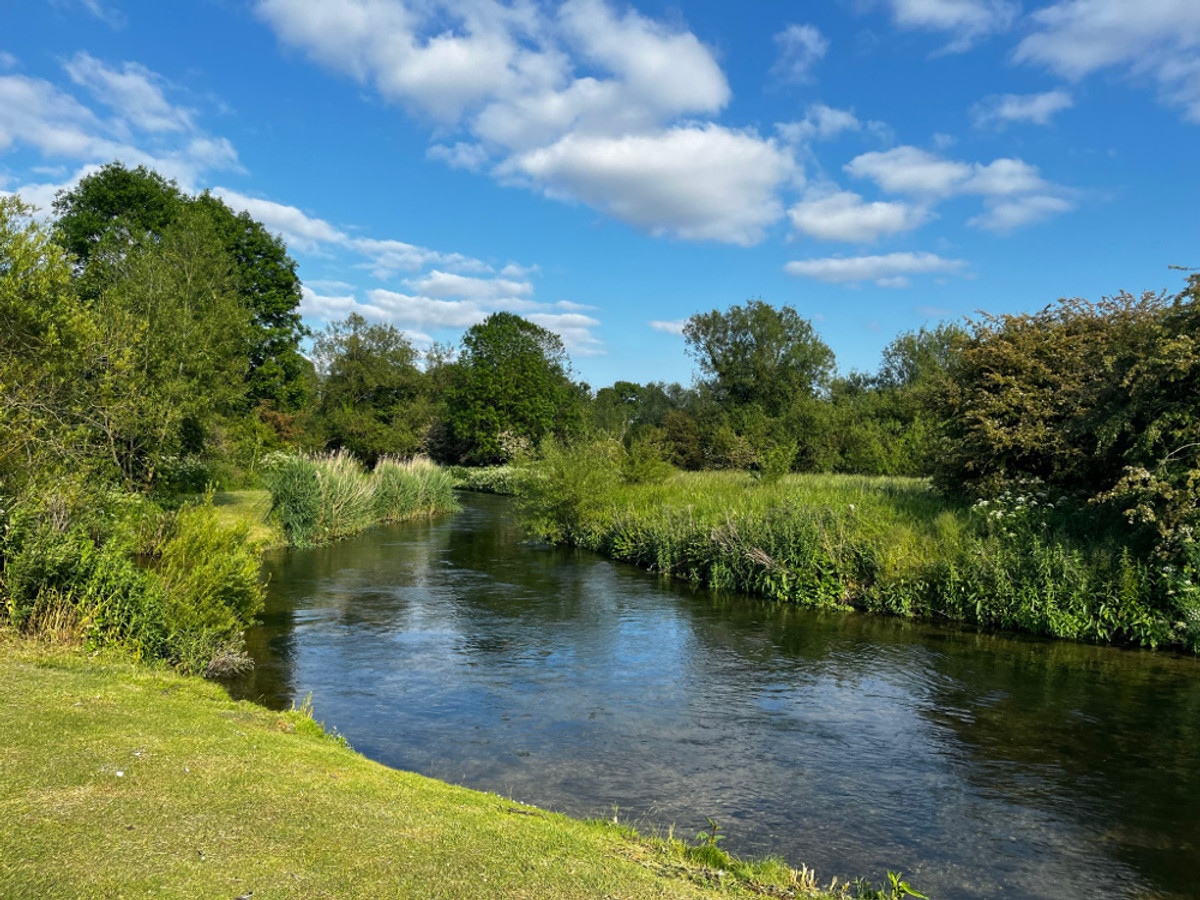
Two miles of the Hampshire Avon below Amesbury, seven miles north of Salisbury and two from Stonehenge, with double bank fishing over much of its length and single bank on the rest. This is the club’s best known game water and the one it has worked hardest on. A 500 metre section below Queensberry Bridge was restored with the Wild Trout Trust, the Environment Agency and the Game Conservancy, followed by further work below South Mill in 2010 and below Ham Hatches to Allenbury Bridge in 2011.
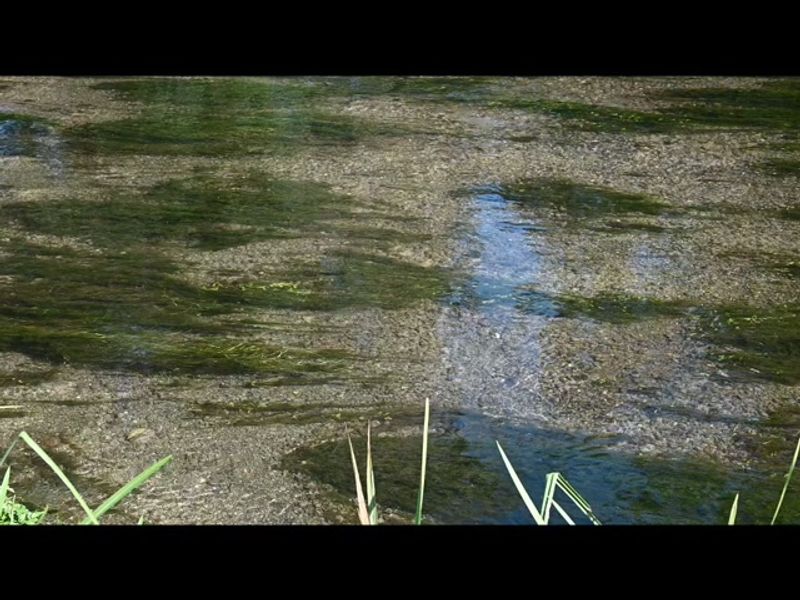
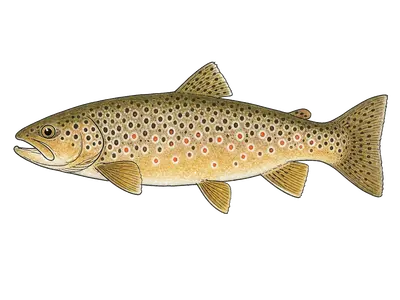
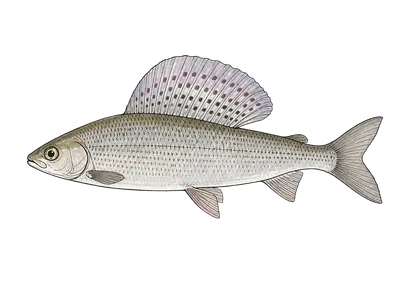
The result is a river that now carries thriving wild trout and grayling and very healthy invertebrate life, and the club has cut stocking right back on the strength of it. Most fish caught here are wild browns and grayling, and most members return them, though a stocked fish may still be taken. The stretch has real variety, from open meadow to wooded sections, deep pools and fast riffles.
The fly life is the reason to come. Mayfly hatches are spectacular, and summer evenings bring blue winged olive spinners in numbers worth sitting out for. The water opens on 1 April and runs to 15 October for trout, then reopens for grayling from 16 October to the end of December. Partial wading is allowed where marked.
Stocking and fish species
Rules and policies
Fishing rules for West Amesbury Fishery
Upstream dry fly only from 1 April to 30 June. Upstream dry fly and nymph from 1 July, to chalk stream etiquette. Grayling from 16 October to 31 December. Partial wading where indicated. No dogs. Adult members may bring one non-fishing companion; junior members may be accompanied by a parent or guardian. Members may buy guest day tickets.
Where West Amesbury Fishery is
The beat's boundary, with parking where we have it.
51.16995, -1.79270
Similar beats on the Hampshire Avon
Hampshire Avon
Avon Springs
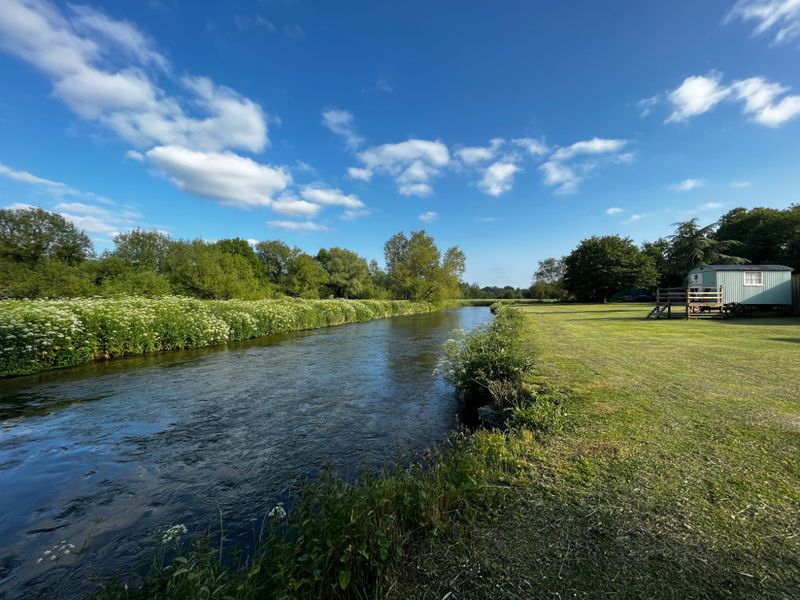
Avon Springs sits beside the Hampshire Avon near Salisbury in Wiltshire, offering a mile of upper chalk stream river fishing on one of southern England's most characterful game rivers. The Hampshire Avon is fed by two headwater streams rising in the Vale of Pewsey — the East Avon from chalk and the West Avon from greensand — which means it sits slightly outside the strictest definition of a chalk stream, but persistent colour from early-season rain clears quickly, and from summer through to season's end the water clarity is comparable to many true chalk streams. The beat accommodates up to four rods and carries a high proportion of wild fish, alongside fish reared on site that are the progeny of the original Avon native strain. The target species are brown trout, rainbow trout, and grayling, with grayling running to 3 lb. Hatches are a genuine draw: early season brings grannom and large dark olives, while the mayfly (Greendrake) — once it starts — can continue for many weeks. The Avon and Wylye can carry mayfly hatching off into July, giving this beat an extended window for the classic dry fly. The river also sees hatches of damselfly and sedge throughout the season. The beat is rated as explorer-level — expect fish that have seen flies before and reward careful presentation. Dry fly only is in force until 1 June, after which traditional nymphs may be used. The season runs 13 April to 13 March, covering both the trout and grayling seasons. Day rod prices run from £71 in the grayling season to £130 during the mayfly window, with early and main season rods at £102 — accessible pricing for a well-managed chalk stream beat. A fishing hut and toilets are on site. The Hampshire Avon is around 90 minutes from London Waterloo to Salisbury, making Avon Springs a practical choice for anglers travelling from London or across the south.
Hampshire Avon
Coombe Mill
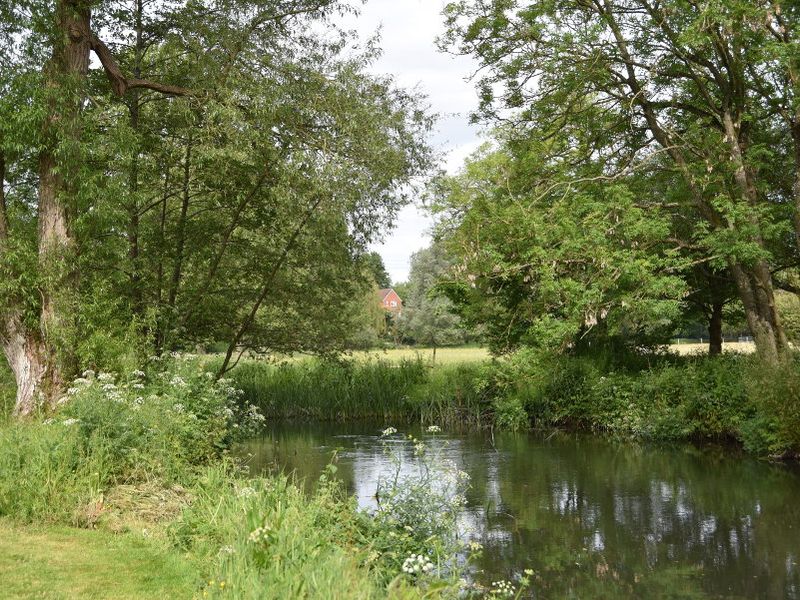
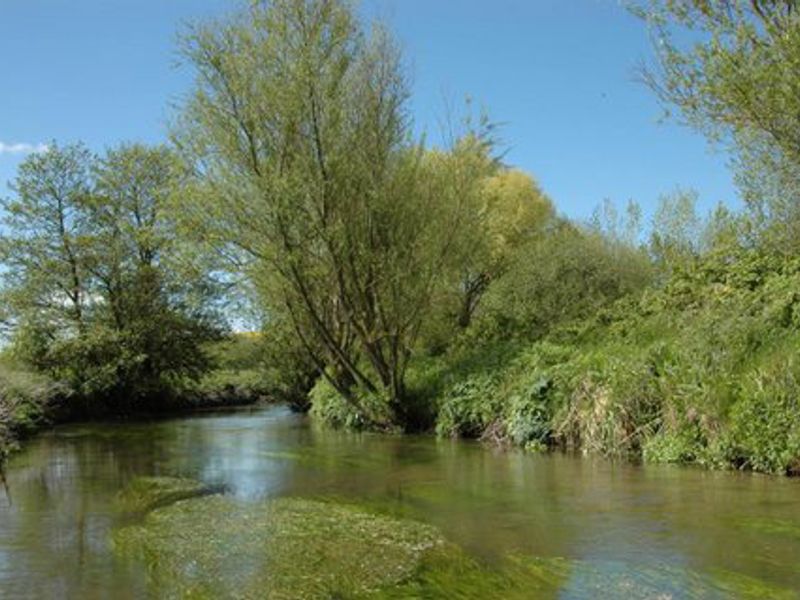
Just under a mile of single-bank dry fly and nymph water on the Hampshire Avon, Coombe Mill sits on the upper chalk stream reach of this historic Wiltshire river. The Avon rises near the Wiltshire/Berkshire border and flows southward for over 40 miles, and for trout fishermen the pick of the beats are upstream of Salisbury, especially over Salisbury Plain — the country where Frank Sawyer keepered and developed the Pheasant Tail Nymph. One of the most varied chalk streams in the UK, with over 180 species of aquatic plant recorded, it also has one of the most diverse populations of fish, plant and wildlife. Persistent heavy rain early in the season can leave the river a little coloured, but it clears quickly, and from summer through to the end of the season the water clarity is comparable to that of many chalk streams. The beat targets wild brown trout and grayling on a fly-only, catch-and-release basis, rated as explorer-level water — expect fish that have seen pressure and reward careful presentation over brute-force casting. The trout season opens in time to catch hatches of grannom and large dark olives, and consistently good fly hatches — especially mayfly (Greendrake), which once started can continue for many weeks — make the Avon a firm favourite for fly fishermen. The classic Wessex chalk streams such as the Avon, Test and Itchen have mayfly hatches starting at the end of May and carrying on to early June. Blue-winged olives and sedges carry the fishing through summer and into autumn. Grayling in the Hampshire Avon are thought to be an original, native population, and on the chalk streams they are usually only targeted from October through to the end of December. The grayling season here runs to 30 December, making this a genuinely year-round beat. Up to three rods fish the bank simultaneously. Rods of between 7½ and 9 ft rated from 3# to 5# lines are the norm, with the longer and slightly heavier outfits suited to wider stretches of the Avon. A 9 ft leader is a sensible minimum. Day-rod pricing runs from £81 in the grayling season to £232 during the mayfly, with main-season days at £156. A fishing hut and toilets are on site. Wading is not permitted; all fishing is from the bank.
Hampshire Avon
Upavon Farm
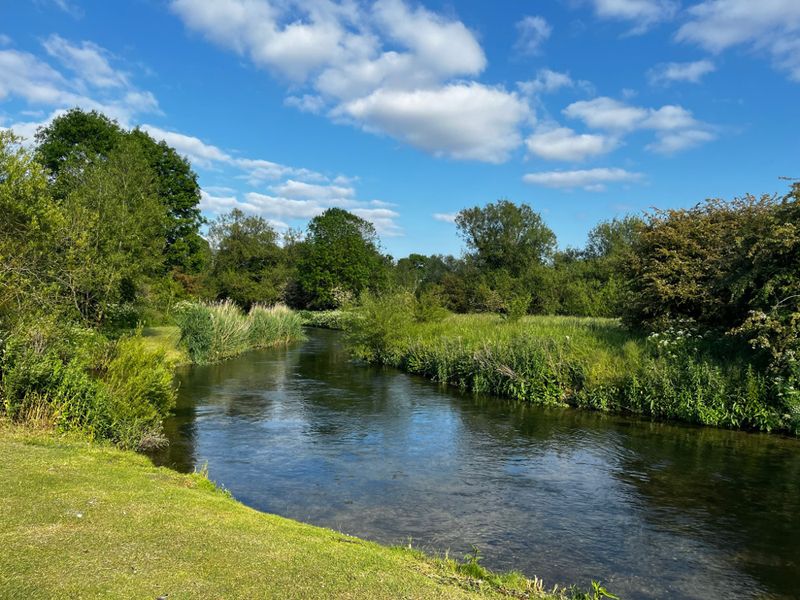
Upavon Farm sits right at the point where the two headwater streams of the Hampshire Avon converge, placing this 0.3-mile beat at the very top of the main river as it begins its chalk-filtered run southward across Salisbury Plain. To fish this stretch effectively, wading is required — the river here is intimate and heavily vegetated, demanding careful approach and precise presentation. One to two rods are accommodated, keeping the beat uncrowded. This challenging chalk stream offers the keen fly fisher a superb opportunity to fish for quality wild brown trout from April through to early October. From October, the focus shifts to wild grayling as they become more dominant throughout the winter months. The season runs from 14 April to 30 December on a strict catch-and-release, fly-only basis. Dry fly only applies until 30 June; nymphing is permitted thereafter, making the beat particularly well suited to targeting grayling on deep-sunk patterns through autumn and winter. The trout season opens in time to catch early hatches of grannom and large dark olives, and consistently good fly hatches — especially mayfly (greendrake) — make the Avon a firm favourite for fly fishermen. Olives, duns, spinners, caenis, and sedges feature throughout the season; on tippets of 3–6 lb, klinkhammers and parachute-hackled dries in sizes 16–20 work well. For trout fishermen, the pick of the Avon beats are upstream of Salisbury, especially over Salisbury Plain where Frank Sawyer — inventor of the Pheasant Tail Nymph — lived and keepered all his life. A rod between 7 ft and 8 ft 6 in (7 ft favoured) with a floating line rated #3/4/5 depending on wind conditions is recommended for the Upavon stretch. Day rod pricing runs from £74 in the grayling season to £111–£137 in peak summer, with toilet facilities on site. Upavon also hosts two local inns — the Ship and the Antelope — both within two minutes' walk, making it straightforward to base a day's fishing around the village. This is expert-level water: the clarity, the wading, and the dry-fly-only restriction through June demand experience, but the reward is access to some of the most historically significant wild-trout fishing on the upper Avon.
Hampshire Avon
Stonehenge Fishery
Six hundred metres of wild, unstocked Avon with a car park right on the river, which is rarer than it sounds on this valley. Four members may fish it at a time. The bottom 200 metres is bank fishing; above that you can wade, and under normal conditions the water runs from knee to waist deep. It is close to Durrington but does not feel it. The setting is rural and quiet, and it is one of very few club fisheries where a non-fishing guest is welcome, so it works for a day when someone is coming along to walk rather than cast. There is a good head of trout and grayling. In 2014 over 600 fish were recorded from only 287 visits, which gives a fair idea of the stock density for a river with no stocking at all. Riverfly monitoring is carried out here and olives, mayflies and cased caddis are all abundant. The Durrington fishery is less than half a mile away.
Wilsford Manor Estate Beat
The Wilsford Manor Estate beat offers approximately one mile of double-bank dry fly and nymph fishing on the Hampshire Avon, set in the Woodford Valley, upstream of Salisbury — the part of the river widely regarded as holding the best trout fishing on the Avon. The river runs wide for this stretch of the upper Avon, with some notably deep water that holds large fish. A former mill leat, naturally deep in places, with comprehensive bank restoration that has created additional holding pools. Brown trout range from small wild fish to genuine double-figure specimens, with the beat moderately stocked with fish of around 2lbs that grow quickly in these food-rich chalk stream waters. A strict catch-and-return policy for all fish above 15 inches means brown trout of 10lbs or more are not uncommon. Mayfly on this stretch are generally prolific and continue for a much longer period than on most rivers — typically from mid-May and often lasting through to the end of July. The season opens on 15 April in time for hatches of grannom and large dark olives, with consistently good fly life throughout. The beat suits beginners and developing anglers well: the double-bank access and varied water give plenty of room to work, and fish are visible and numerous. Fishing is available for a minimum of 2 and a maximum of 4 rods per day. The season runs from 15 April to 30 September, with fishing from 9am to 7pm. The riverbank fishing cabin provides indoor and outdoor seating, a barbecue, a well-stocked fridge, hot and cold drinks, satellite TV, and shelter from the weather, with lavatory and changing facilities in an adjoining hut. Parking is a short walk from the water.
Formed by two headwaters rising in the Vale of Pewsey, the Hampshire Avon merges near Upavon and flows south for 60 miles across Salisbury Plain, passing through Durrington, Amesbury and Salisbury before crossing into Hampshire and running through Fordingbridge and Ringwood to empty into Christchurch Harbour. The East…
FishingBeats is an independent guide with no affiliation to the fisheries we list. Listings are editorial and unpaid, and are not supplied or approved by the fishery. See our listings policy. Listing details are compiled by FishingBeats and may change or contain mistakes. Some services, such as tuition, ghillies, or accommodation, may only apply to certain packages and not to standard day tickets. Always confirm pricing, fishing details, and what is included directly with the beat before you book. Spotted something wrong? Email hello@fishingbeats.com and we will correct it.
FAQ
West Amesbury Fishery FAQs
Practical questions anglers ask before fishing West Amesbury Fishery, from tickets to tactics.