River Dun · Holbury Lakes Trout Fishery
Holbury Beat
Holbury Beat is a fishing beat on the River Dun at Holbury Lakes Trout Fishery. Day tickets from £120.
Pricing and season
Indicative prices only. This calendar does not show whether a beat is bookable or already booked out, and other prices may apply. Always confirm availability and the final price with the booking provider before you travel.
Price calendar
Fishing details
Holbury Beat at a glance
- Rods
- 1 – 2
- Difficulty
- Adventurer (3/5)
- Length
- 0.75 miles
- Water type
- chalk stream
Fishing methods
Fly methods
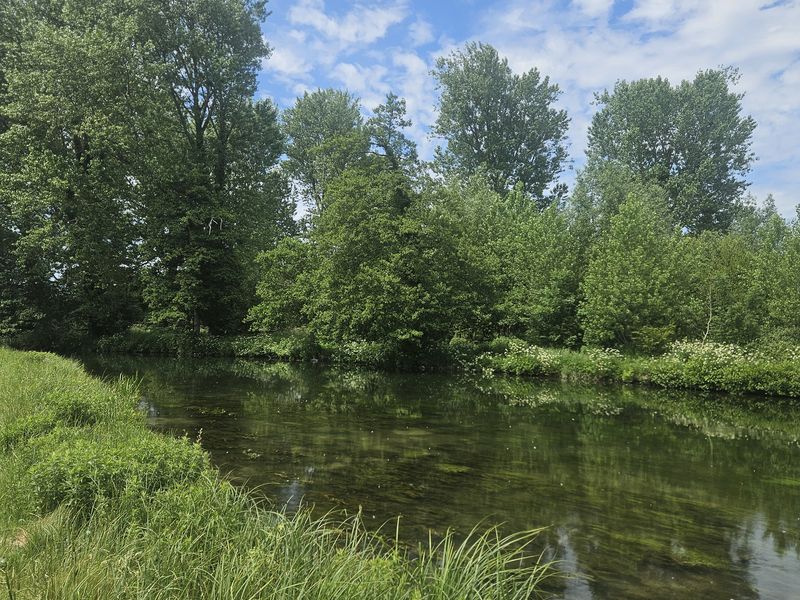
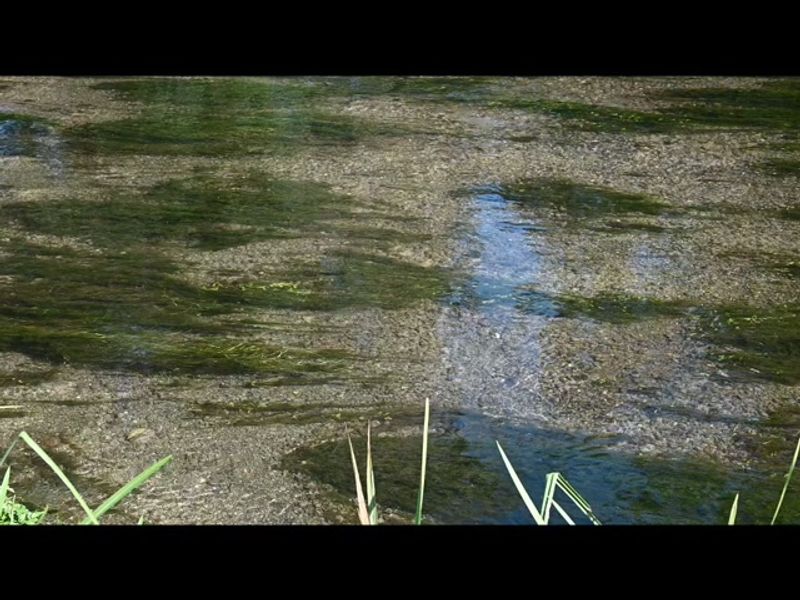
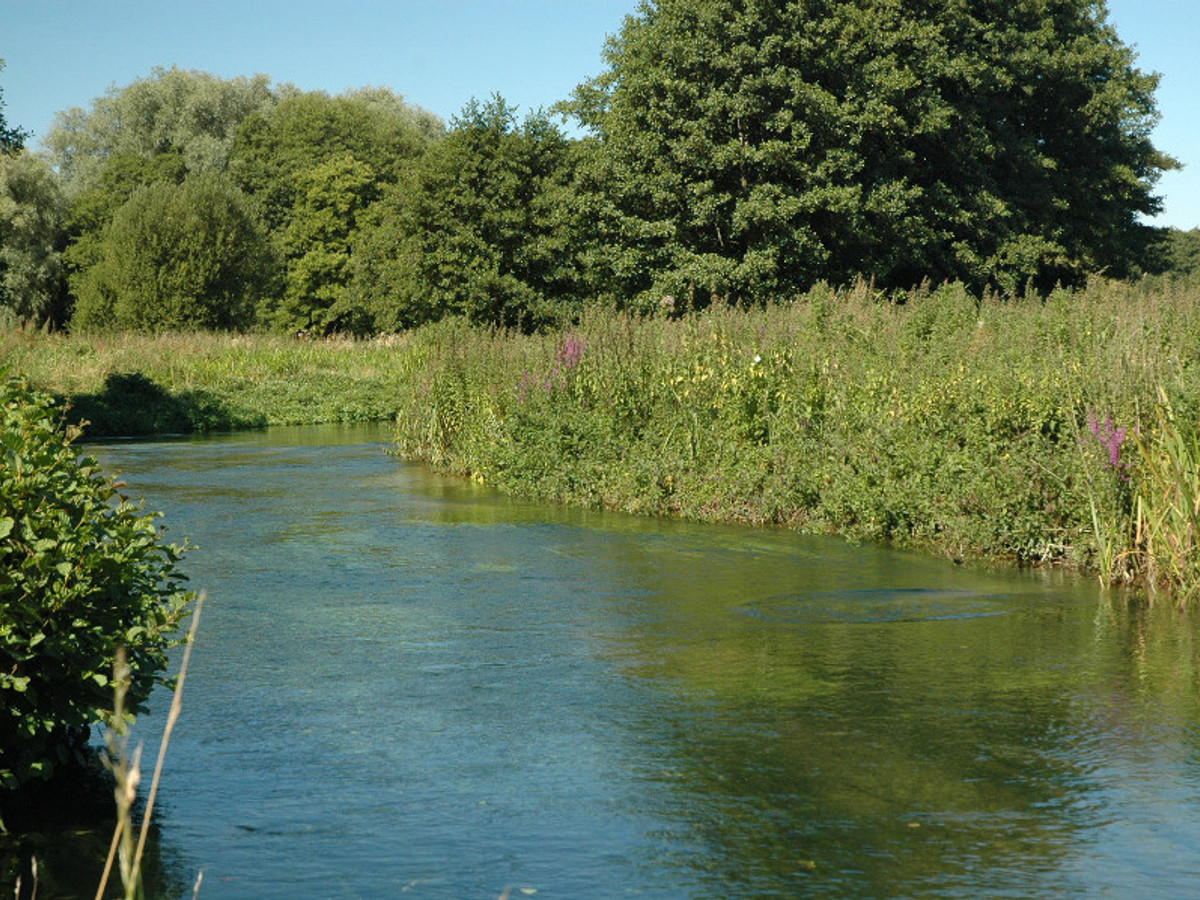
Holbury Beat covers about two thirds of a mile of the River Dun in Hampshire, with around 650 metres of it fishable from the bank. The river here averages six metres wide and a metre and a half deep, and runs gin clear through the season. Heavy rain brings it up and colours it quickly, but it can be clear again within 24 hours.
The top half of the beat runs fast over chalky gravel. Lower down it slows around a bend and flows quietly under overhanging branches, which is where the trout tend to sit. The banks are high and the sun is often behind you, so keep an eye on your shadow, and there are enough branches overhead to reward a hook, curve or slide cast rather than a straight one.
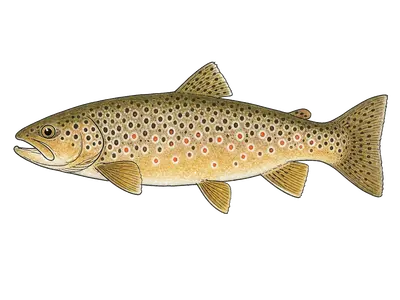
This is wild Brown Trout water, strictly catch and release, dry fly and nymph only. Holbury Lakes Trout Fishery keeps the beat lightly fished, limiting it to one rod a day, or two friends fishing together. The season runs from 3 April to 24 October.
Flies worth carrying include Black Gnat, Pheasant-Tail and Gold-Ribbed Hare’s-Ear nymphs, Iron Blue, and Mayfly in season, tied small: size 16 or smaller suits this clear water best. A day on the beat starts from £120. Holbury Lakes Trout Fishery also sells a combined ticket covering its lakes and the river, for anglers who want both in a day.
Stocking and fish species
Rules and policies
Fishing rules for Holbury Beat
Fly fishing only, one single hook, maximum size 8. Dry fly and nymph only on the river. Strictly catch and release - no fish may be taken from the river. Every angler must carry a landing net and a priest. All fish caught must be weighed and recorded in the return book, and nil returns entered too. No wading or swimming. No litter, radios or animals. One non-fishing guest per angler. A current Environment Agency rod licence is required on the day. Gates open at 8.30am; if you arrive early, park on the village green rather than on Holbury Lane.
Amenities
Where Holbury Beat is
The beat's boundary, with parking where we have it.
51.04159, -1.58765
The fishery and river
Similar beats on the River Dun
River Dun
Dunbridge
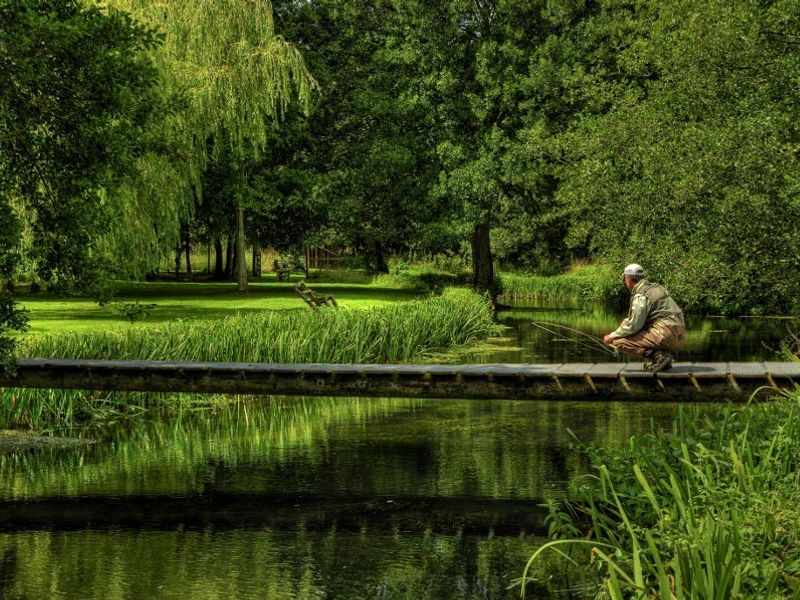
A third of a mile of single-bank dry fly water on the lower River Dun, the Dunbridge beat sits just upstream of the hamlet of Dunbridge in Hampshire's Test Valley, a short distance before the river joins the Test near Kimbridge. The Dun runs for around 11 miles in a generally easterly direction through rural parts of Wiltshire and Hampshire, and is smaller and less prolific than other rivers in Hampshire, but can be quieter during busy periods — a genuine advantage on a beat limited to one or two rods. The water here has classic chalk stream character: a long glide of relatively shallow water upstream of a footbridge, and a deep pool midway up where the river takes a left turn. From the car park, it is a walk of around 100 metres through a meadow to reach the river. A survey of all the Test's tributaries reportedly found that the Dun holds the highest numbers of wild trout of any of them, and the Dunbridge beat carries moderate stocking alongside that wild population. Brown trout and grayling are both present. Like the Itchen, the Dun is home to protected species including the great crested newt, so the environment is carefully managed. The season runs 1 May to 30 September, covering the full chalk stream hatch calendar. The hawthorn hatch falls in late April, with the mayfly running from mid-May to early June — the latter priced at £395 per rod. Medium olive and blue-winged olive hatches carry the fishing through summer, with dry fly the primary method throughout; nymphing is also permitted. The intimate scale and clear water make accurate presentation essential, and the beat is rated as adventurer difficulty. A 9ft 4–5wt rod with a fine tippet suits the conditions. Day rods are priced from £225 (early season) to £275 (main season). The fishing hut is sited near the top of the beat and is well appointed, with WC and car parking on site. The hamlet is served by Mottisfont & Dunbridge station on the Wessex Main Line, making this one of the more accessible chalk stream beats in Hampshire for car-free anglers.
Dun Beat
Dun Beat is the Mottisfont Abbey estate water on the River Dun, a tributary of the River Test in , running about 0.45 mile. It is a smaller and more intimate stream than the Test beats, and it carries some of the best fly life anywhere on the estate. The beat divides into two. The lower half is slow moving, with long sweeping glides where the river turns through the deciduous woodland of Bitterne Grove, and this is usually where the larger fish sit. The upper section runs through meadows and is much narrower, with thick marginal growth on both banks. Both halves have fairly high banks, which makes spotting easier but leaves you visible to the fish. Much of the beat can be waded, though depths vary, so it is worth deciding whether a cast from the bank will do before you get in. The water is unstocked and catch and release, and holds Brown Trout, Grayling. Fishing is upstream dry fly and nymph from 1 April to 30 September. Mayfly is exceptional, and in June the evening hatches of blue-winged olive can be the best of the season. The fish are small and easily spooked, so a light outfit and some patience pay off. A 7ft 2 or 3 weight is the fun choice, an 8ft 6in 5 weight the safer one. There is a small hut for shelter, but lunch is taken back at the Oakley hut. Day tickets start at £270 and cover all three Mottisfont beats.
A compact chalk stream in the Test Valley, the River Dun rises near the villages of East and West Grimstead in Wiltshire and flows roughly 11 miles eastward before joining the River Test near KimbridgeDun. Depending on winter rainfall, the river rises between East and West Grimstead and flows almost due east to meet…
FishingBeats is an independent guide with no affiliation to the fisheries we list. Listings are editorial and unpaid, and are not supplied or approved by the fishery. See our listings policy. Listing details are compiled by FishingBeats and may change or contain mistakes. Some services, such as tuition, ghillies, or accommodation, may only apply to certain packages and not to standard day tickets. Always confirm pricing, fishing details, and what is included directly with the beat before you book. Spotted something wrong? Email hello@fishingbeats.com and we will correct it.
FAQ
Holbury Beat FAQs
Practical questions anglers ask before fishing Holbury Beat, from tickets to tactics.