River Dove · Derbyshire County Angling Club
Wolfscote Dale
Wolfscote Dale is a fishing beat on the River Dove at Derbyshire County Angling Club. Club members only.
Pricing and season
Fishing details
Wolfscote Dale at a glance
- Rods
- –
- Difficulty
- Adventurer (3/5)
- Length
- 3 miles
- Water type
- main river
Fishing methods
Fly methods
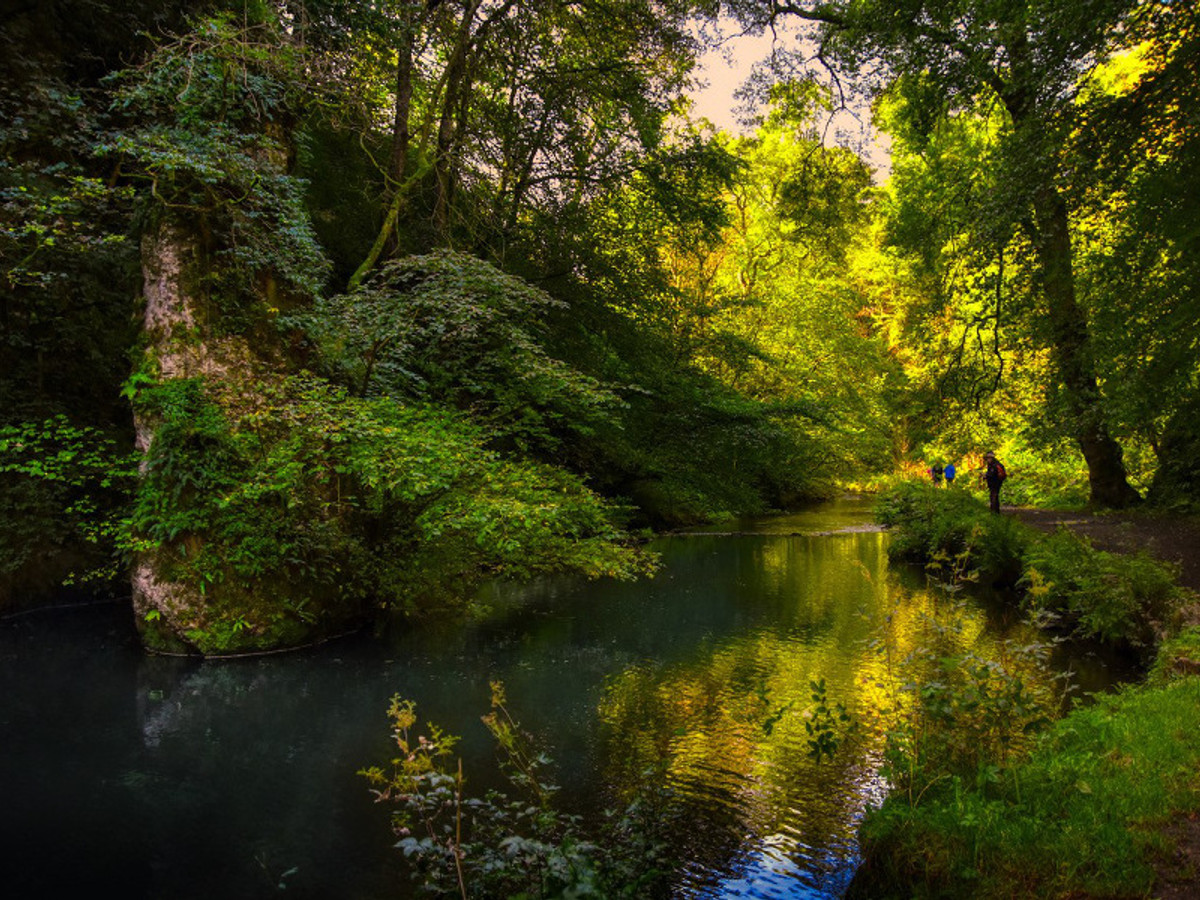
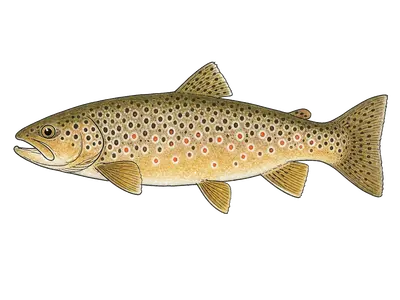
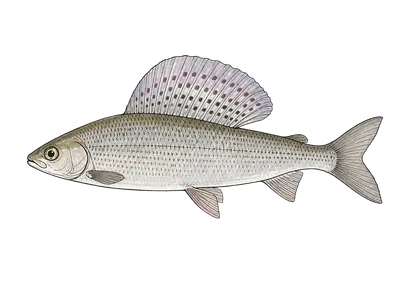
Wolfscote Dale is three miles of the River Dove held by Derbyshire County Angling Club, immediately below Beresford Dale in the limestone dales between Hartington and Alstonefield. This is upper Dove at its best: clear water running through steep-sided dale scenery, holding wild brown trout and grayling, fished fly only.
Sizes here are honest rather than showy. A pound is a good trout on this stretch, though larger fish are caught, and the grayling have a strong reputation among those who fish it, with some genuinely excellent fish coming from the water through the winter.
DCAC does not publish exact locations for its water, and members receive full details on joining, so there is little to add here beyond the character of the fishing itself: wild, technical, dale-bound water that rewards careful, unhurried fishing over numbers. Membership costs £370 a year plus a £380 joining fee, and there are no day tickets.
Stocking and fish species
Rules and policies
Where Wolfscote Dale is
Exact location is hidden at the owner's request. This beat is on the River Dove at Derbyshire County Angling Club.
River onlyThe fishery and river
Similar beats on the River Dove
River Dove
Cotton's Fishing Temple
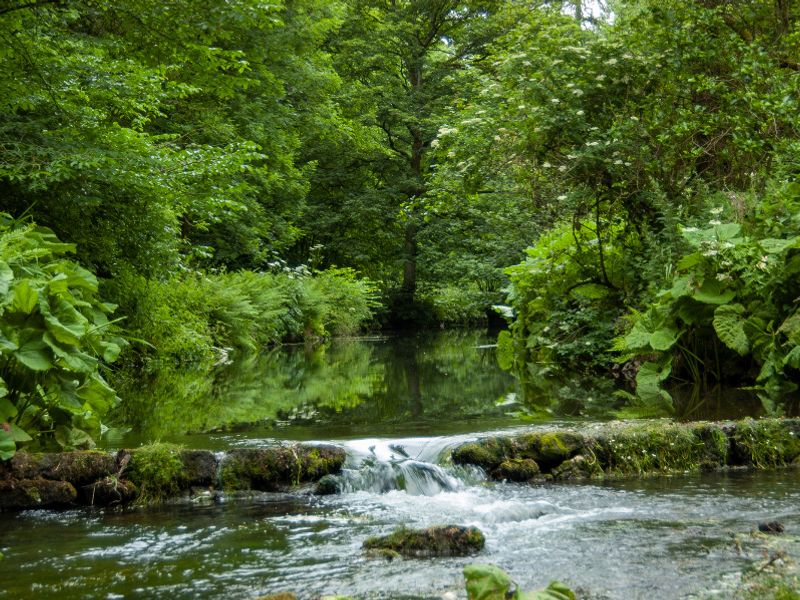
Cotton's Fishing Temple sits in Beresford Dale, near Hartington, on the River Dove in , and takes its name from the fishing house Charles Cotton built here in 1674. The doorway still carries the entwined initials of Cotton and Izaak Walton, with the inscription Piscatoribus Sacrum, and the building stands on the beat to this day. Cotton wrote the fly-fishing half of The Compleat Angler, and there are few places on any English river where that history sits so close to the water. The beat itself runs 2 miles of double bank, entirely wild: Brown Trout, Grayling, with no stocking on this stretch. Years of habitat work have narrowed the river to an average of 12 to 20 feet, pinching down to as little as 6 feet in places where the bankside growth closes in over summer, so this suits shorter rods and lighter lines: 6ft to 8ft 6in, 2-5wt, stepping up a little in spring and winter. Fish rise freely to good hatches of mayfly, blue-winged olives and a variety of sedges. The beat suits one or two rods well, or a party of three at most, with a maximum of three rods and no dogs. The keeper is usually on hand to meet rods on the beat and show them round, and the fishery has been steadily improved over the past three years. Wading is possible where preferred, though the beat fishes perfectly well from the bank. The season runs 1 April to 28 February, covering both the trout season and a distinct grayling season from 8 October. Day tickets start from £65 during the main season. Grayling days are available from £35.
Ellastone
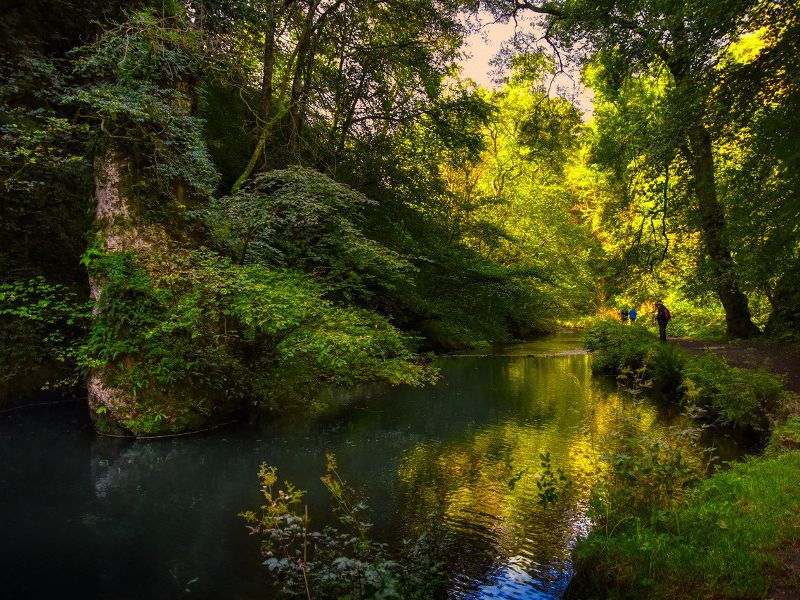
Ellastone is the smallest of Derby Railway Angling Club's four sections on the River Dove: 500 yards of single bank fishing on the Staffordshire bank, upstream of the road bridge between Ashbourne and Rocester. It's also the most exclusive, restricted to two rods a day, booked in advance rather than turned up to on spec. That trade-off is the point of the place. In exchange for the small size and the booking system, Ellastone stays quiet, and the fishing is good: brown trout and grayling, with the occasional rainbow, across a lower section of steady glides and deeper pools and a faster, riffled top end. A small brook feeds in from the Mill Pool, and trout and grayling can be found holding in its deeper holes and eddies, though the Mill Pool itself is currently badly silted and in need of restoration. Ellastone is also excluded from DRAC's coarse-only membership tier, so fishing here needs the full Trout & Coarse membership, with the day itself booked ahead through info@drac.org.uk.
Eaton Dovedale
Eaton Dovedale runs 1.75 miles of single bank fishing on the River Dove, about a mile downstream of Rocester, and it is the best of Derby Railway Angling Club's four sections for fly fishing. Trout and grayling predominate here rather than sharing the water evenly with coarse species, as they do at Tutbury and Scropton, and the section has a good mayfly hatch in late May and early June worth planning a trip around. Chub and barbel are present too, in smaller numbers than further downstream, but the section still produces chub to 6lb and, occasionally, pike to 20lb for anyone fishing for them. Parking is on the river bank at the top of the section. As with the rest of DRAC's water, there are no day tickets here. Fishing Eaton Dovedale means joining the club, either as an Associate Trout & Coarse member or, since the coarse tier covers this section too, as an Associate Coarse member.
Scropton
Scropton is a shorter section of the River Dove, around three-quarters of a mile, held by Derby Railway Angling Club, and it is mainly double bank, worth noting on a river where most club water is fished from one side only. A farm bridge by Riverside Farm serves both banks, so a day here can be fished from either side, or both, without doubling back to a car park. The species mix runs wide: double-figure barbel and chub to 6lb are the headline fish, with trout, grayling, dace, perch and pike also present. Parking sits about 100 yards from the river, roughly in the middle of the section, making either bank an easy walk. There are no day tickets at Scropton, or anywhere else on DRAC water. Fishing here means joining the club, either as an Associate Trout & Coarse member or, since Scropton is included in the coarse tier, as an Associate Coarse member.
Tutbury
Tutbury is 1.25 miles of single bank fishing on the Derbyshire bank of the River Dove, held by Derby Railway Angling Club. A weir sits roughly in the middle of the section and splits its character in two: below it, good pools and riffles give varied, faster fishing; above it, the water slows and deepens. This is as much a coarse water as a fly beat, and it's worth coming prepared for either. Tutbury has a strong reputation for specimen barbel and chub, with double-figure barbel and chub to 6lb not uncommon, alongside dace and perch. Trout and grayling are present too, and worth targeting particularly in the faster water below the weir. Parking is off Scropton Old Road at the downstream end of the section, limited to six cars, by courtesy of Nottingham Piscatorials; the fishing starts from the field upstream of the car park. A night permit is available for anglers fishing on into the dark for barbel. There are no day tickets here: fishing Tutbury means joining Derby Railway Angling Club.
Rising on Axe Edge Moor near Buxton, the River Dove runs for 45 miles south through the Peak District before meeting the River Trent at Newton Solney, from where its waters reach the North Sea via the Humber Estuary. For most of its course it forms the boundary between Staffordshire and Derbyshire, meandering past…
FishingBeats is an independent guide with no affiliation to the fisheries we list. Listings are editorial and unpaid, and are not supplied or approved by the fishery. See our listings policy. Listing details are compiled by FishingBeats and may change or contain mistakes. Some services, such as tuition, ghillies, or accommodation, may only apply to certain packages and not to standard day tickets. Always confirm pricing, fishing details, and what is included directly with the beat before you book. Spotted something wrong? Email hello@fishingbeats.com and we will correct it.
FAQ
Wolfscote Dale FAQs
Practical questions anglers ask before fishing Wolfscote Dale, from tickets to tactics.